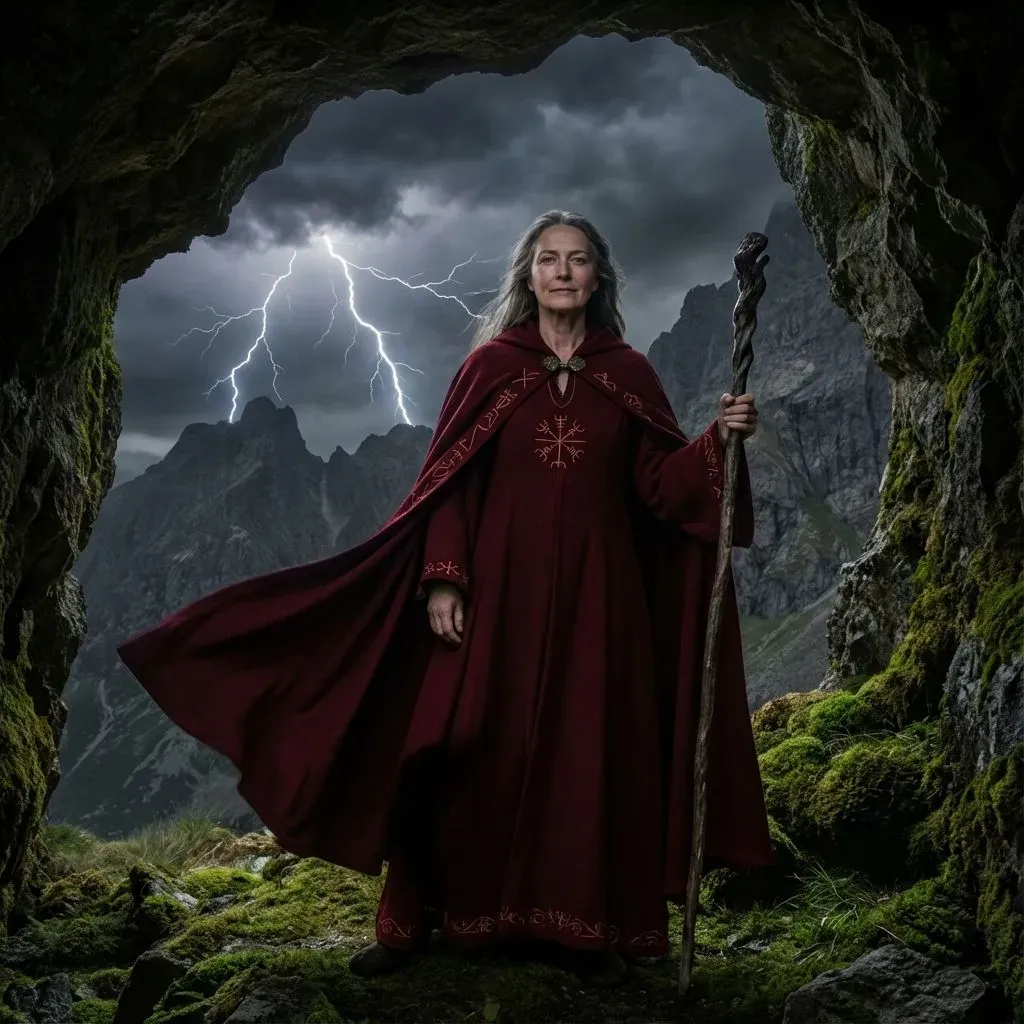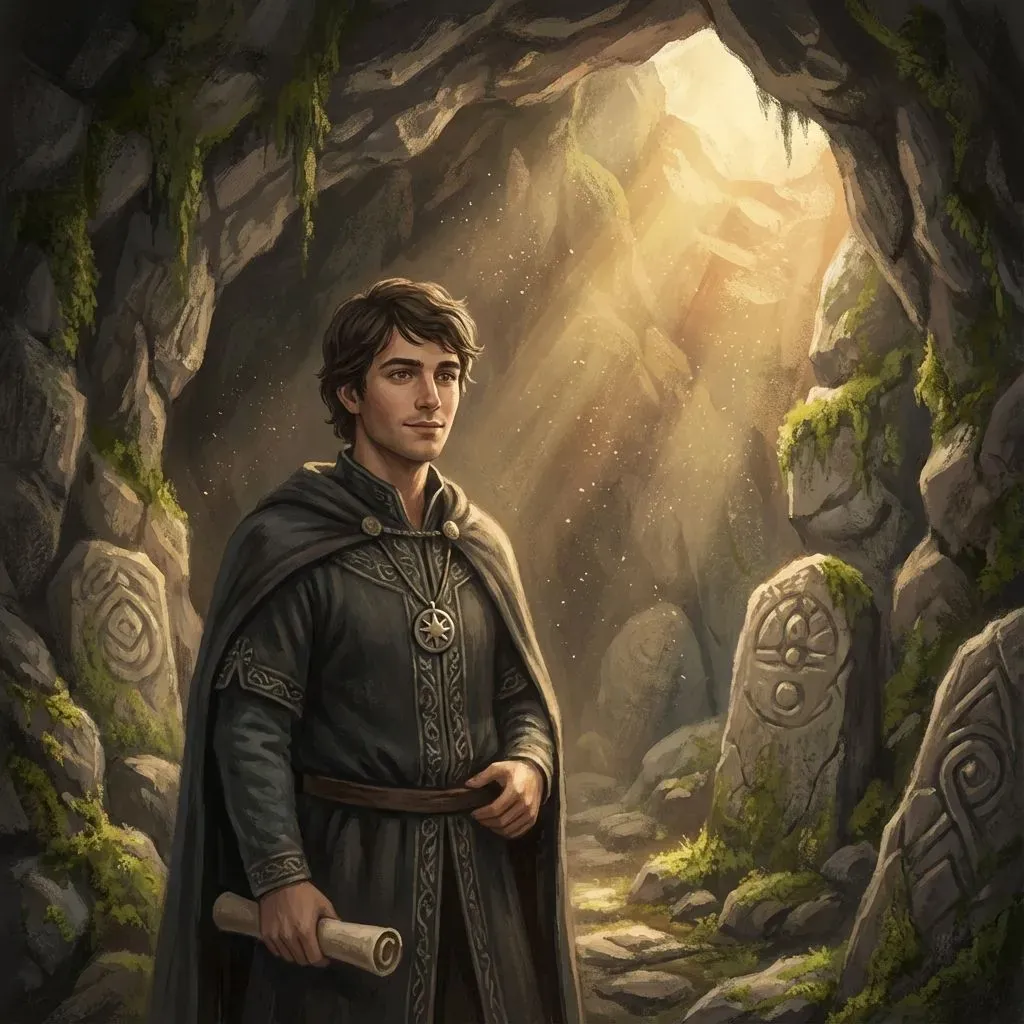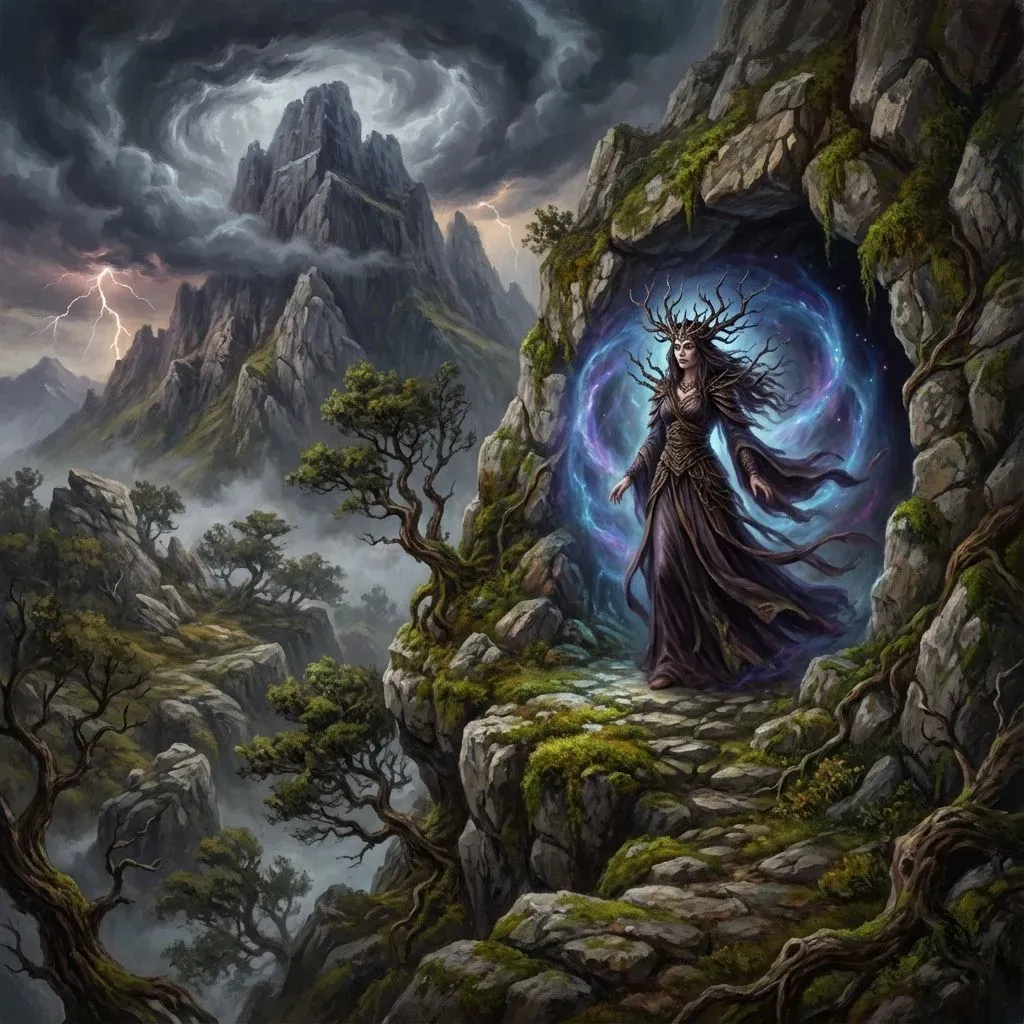
Anboto cave
Where Mari raised the twins and where Mikelats remains.
— Mari's conditions for freeing a son —
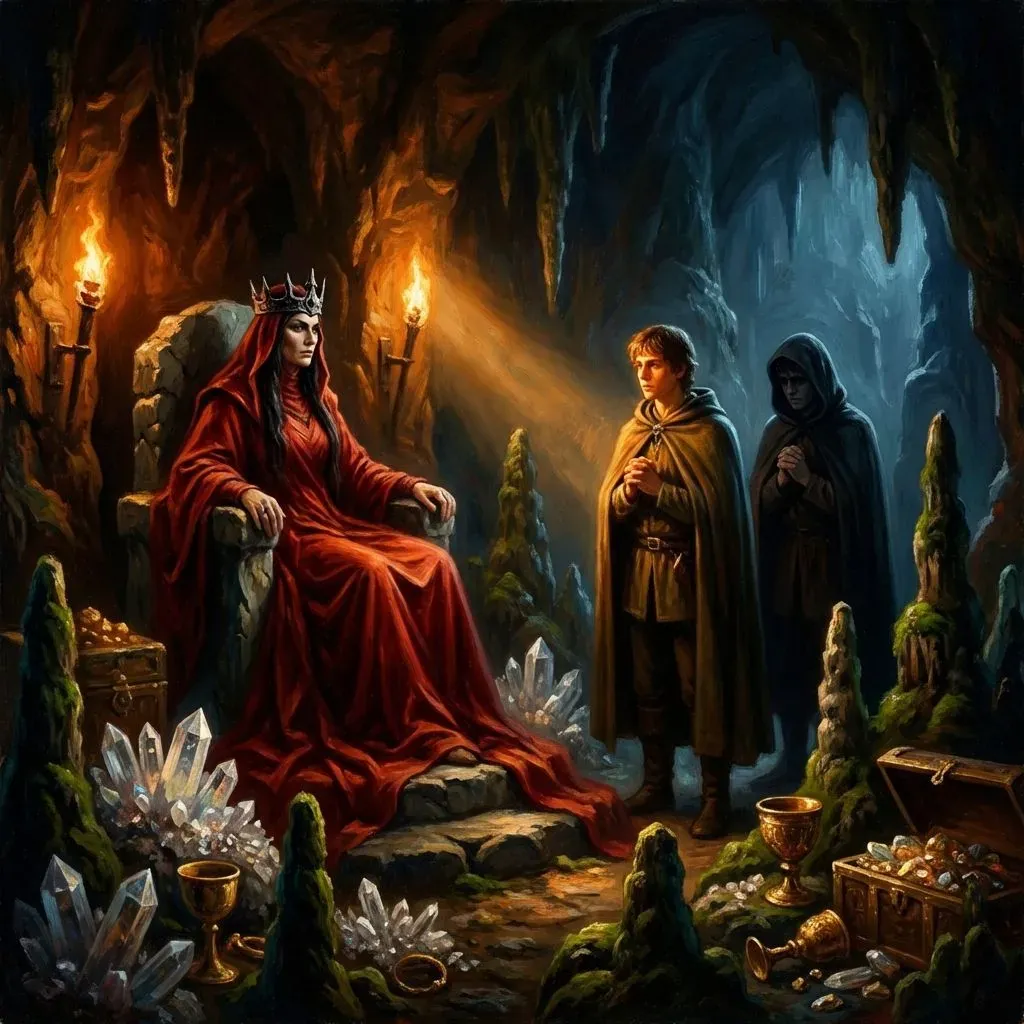
Mari raised her twin sons, Atarrabi and Mikelats, deep inside her cave on Anboto. But the day came when both wished to go out into the world, see the sunlight and walk among humans.
The mother goddess imposed one condition: only one of them could leave, and he had to do so before the first ray of dawn. Whoever was caught by the sunlight inside the cave would remain with Mari forever. It was a test of ingenuity rather than strength.
Atarrabi, the cleverer brother, devised a plan. He placed a sheep at the cave entrance so that its shadow fell inside. When the first rays of sunlight arrived, he ran behind the sheep’s shadow, sheltered from the light. He escaped, although his own shadow remained trapped in the cave forever.
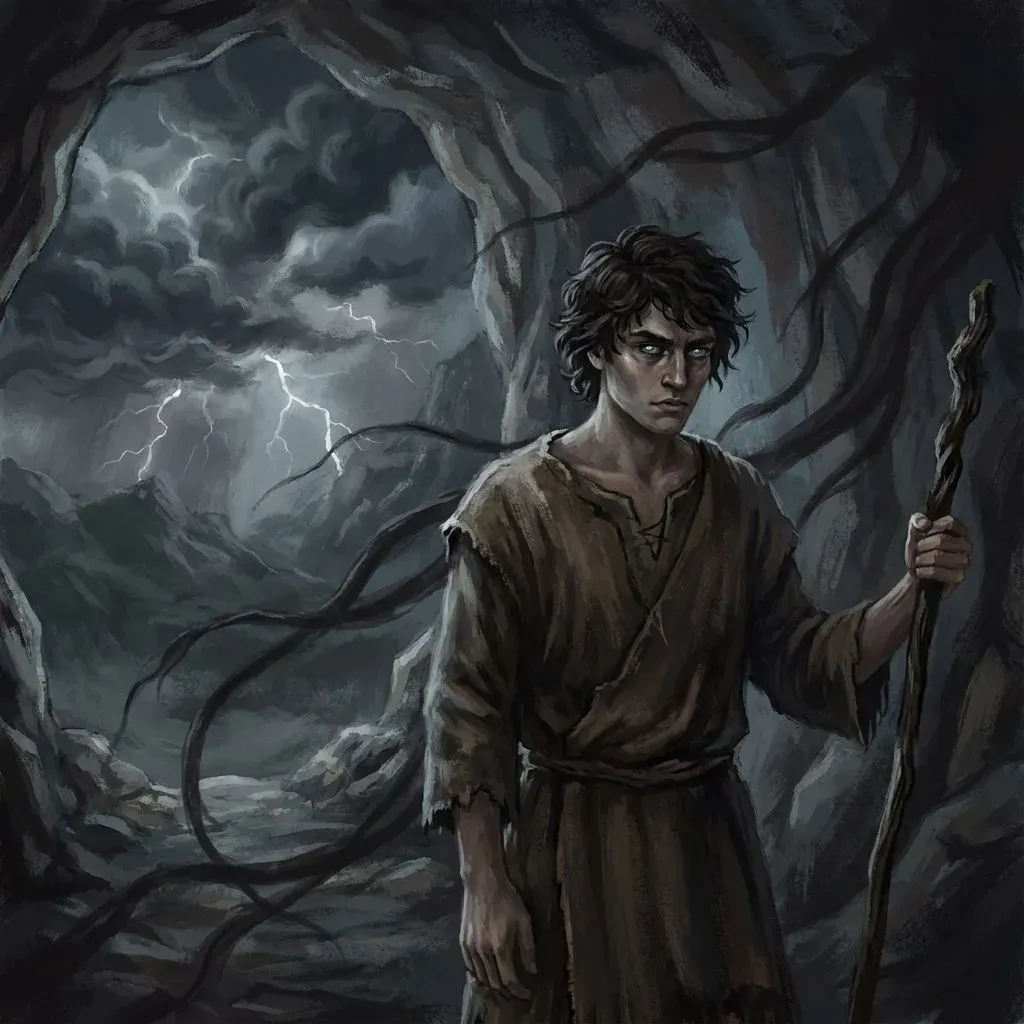
Mikelats, trusting in his brute strength, tried to run faster than the light. He failed. The sun’s rays caught him, and he was chained in the depths to serve his mother forever.
Where Mari raised the twins and where Mikelats remains.
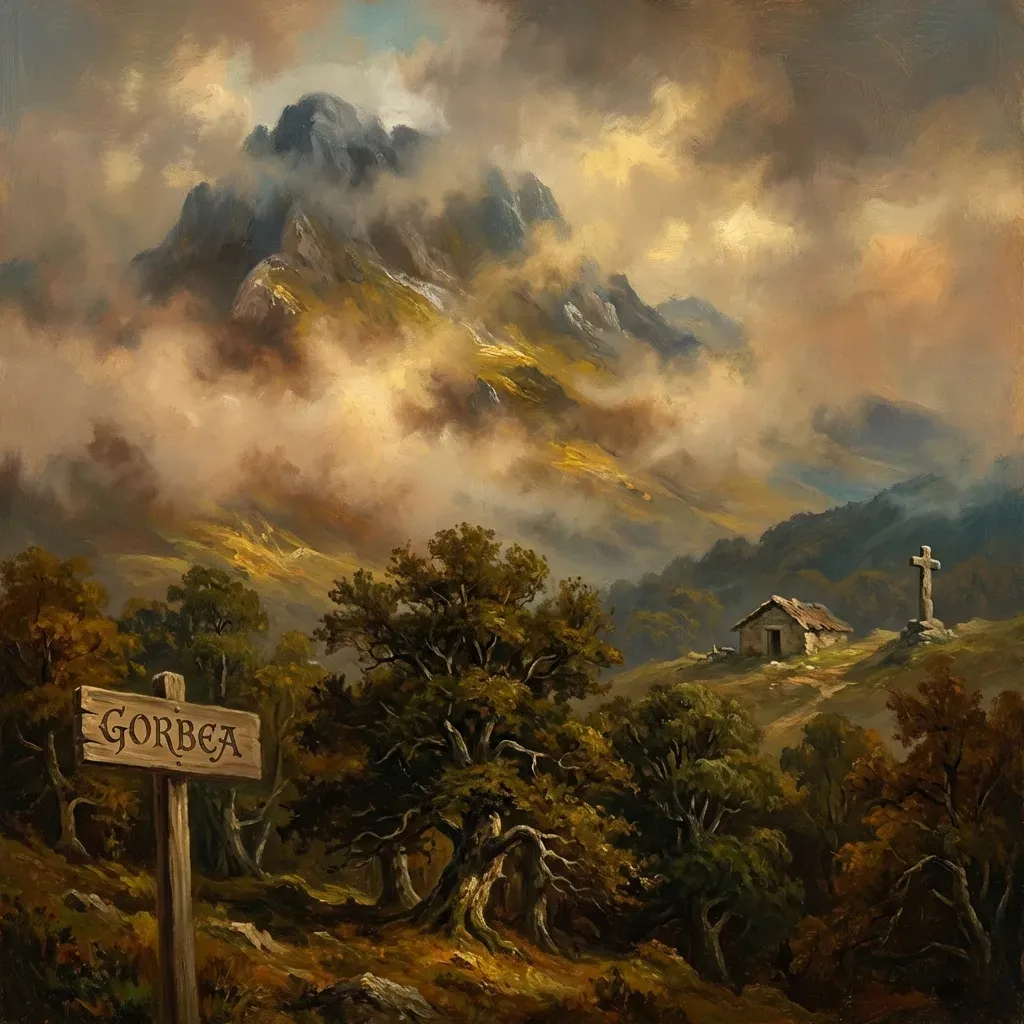
Where Atarrabi escaped to teach humans.
In moments of deepest despair, when human medicine had exhausted its resources and a loved one’s life hung by something more fragile than hope, Basque mothers knew whom to approach. An appeal to Mari was a negotiation rather than a prayer, and its terms were always very precise.
A mother whose child fell gravely ill in midwinter would climb the mountain alone, find a place without witnesses and offer the goddess something of equal value to what she asked. Work, time, abstinence or specific sacrifices in exchange for the child’s recovery were the language Mari understood best.
If the child recovered, the mother had to fulfil exactly what she had promised within the agreed time, without excuses or delay. Failing to do so, or trying to renegotiate after the goddess had kept her side of the bargain, brought consequences far worse than those that had prompted the original plea.
This strict ethic of keeping promises made to higher powers runs through the entire relationship between Basque people and their supernatural world. It resembles commercial honesty more than devotion or blind faith: both parties honour the agreement, or the system of exchange breaks down forever.