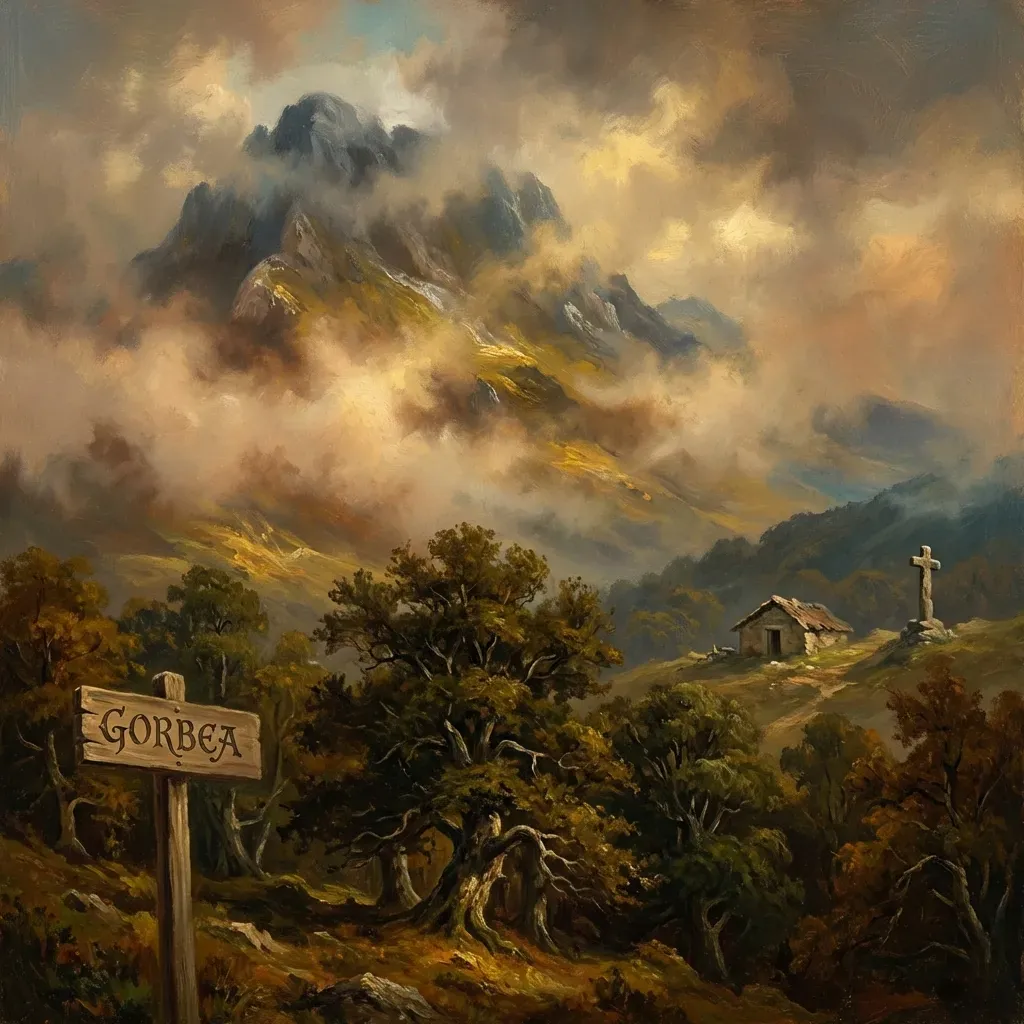
Muxika Valley
The Bizkaian setting where the sacred oaks Peru and Mari were remembered.
Sacred oaks and sworn promises
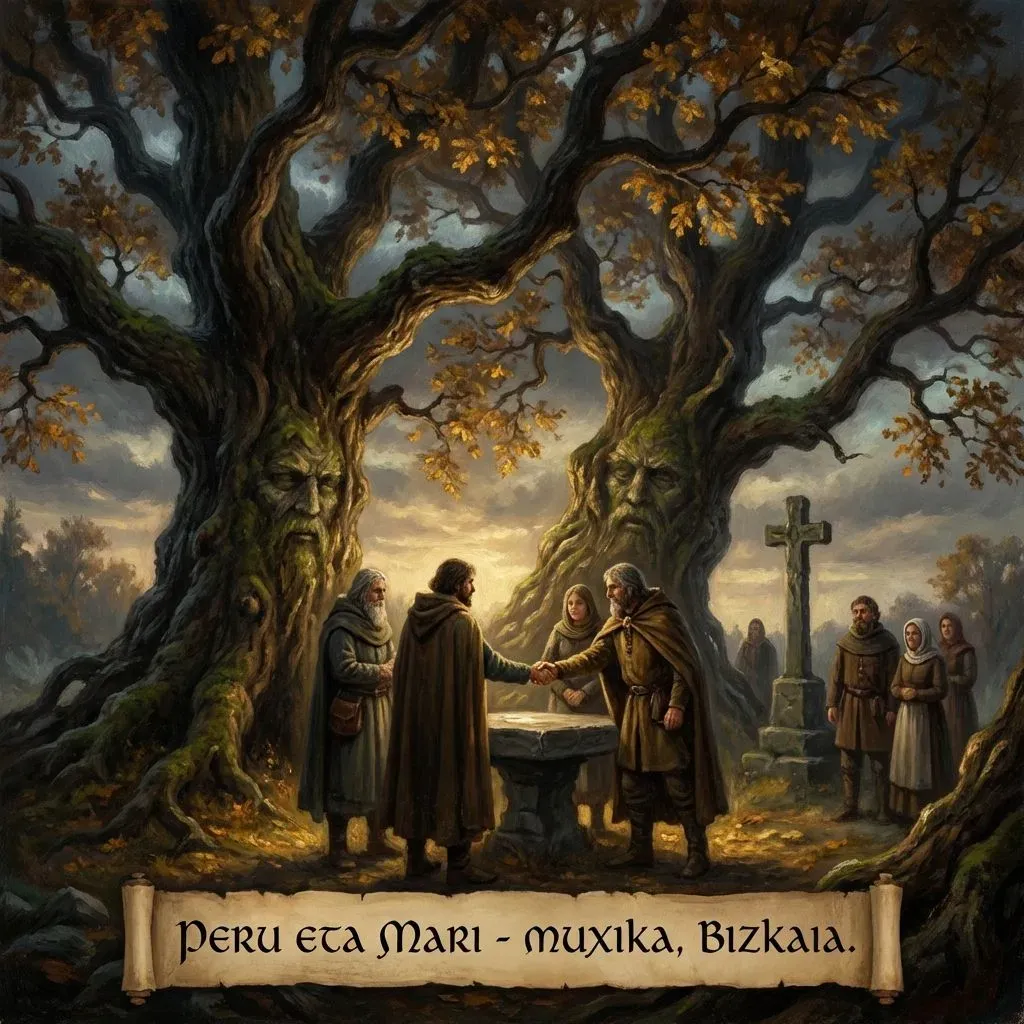
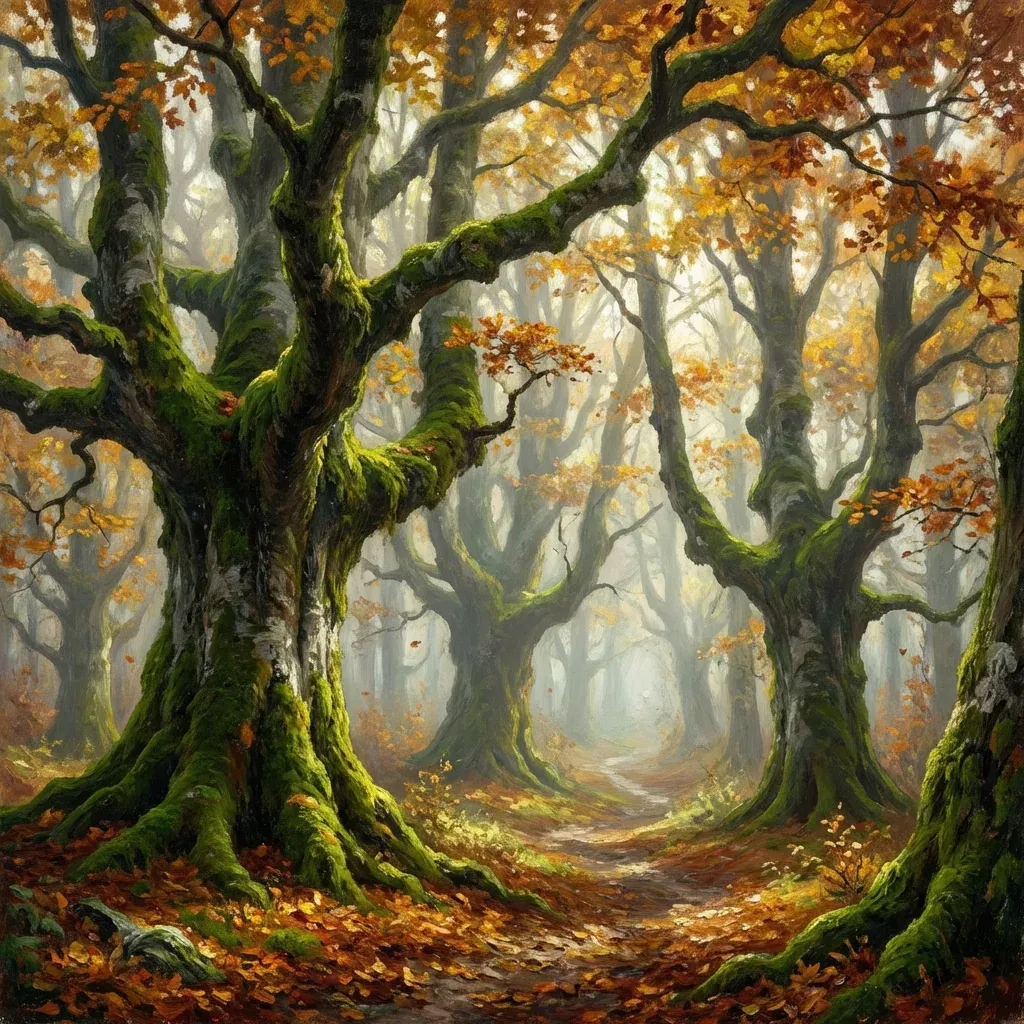
In the valley of Muxika, in Bizkaia, two ancient oaks named Peru and Mari were remembered as sacred witnesses to the agreements of the community.
Beneath their branches people sealed marriages, inheritances, commercial arrangements and solemn pacts. A promise made there carried more than social force: it was thought to bind the speaker before the spirits of the land.
Breaking one of those promises invited misfortune. Illness, ruined harvests or the loss of livestock were understood as the consequence of betraying a word given beneath the trees.
The legend belongs to a wider Basque reverence for the oak, from local sacred trees to the famous tree of Gernika. It preserves the idea that justice once had roots in the landscape itself.
The Bizkaian setting where the sacred oaks Peru and Mari were remembered.
The town associated with the most famous sacred oak in Basque memory.
Peru and Mari speak to a Basque world in which landscape, social obligation and memory are inseparable. The oak is not decoration but a participant in the making of truth.
That is why the story gives such importance to oath and reciprocity. The tree becomes a living archive of human promises and a silent judge of those who betray them.
Some versions soften the solemnity with irony, but the underlying idea remains serious: the human community is small before the forces that uphold justice, and yet it must still answer to them.
Peru represents the Basque awareness of its own smallness before the forces of the land, but also the refusal to turn that smallness into humiliation.