Deep caves
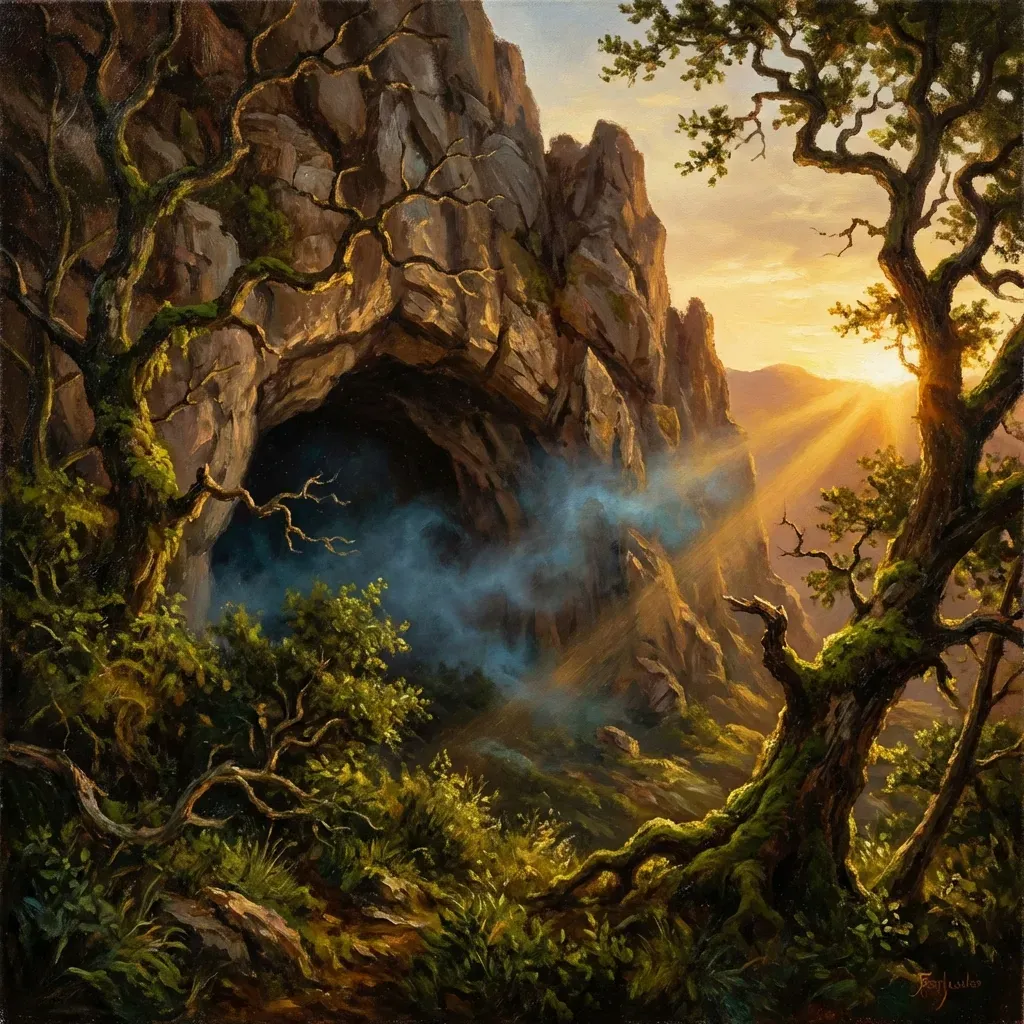
Lairs where Herensuge guarded immense treasures.
The seven headed dragon
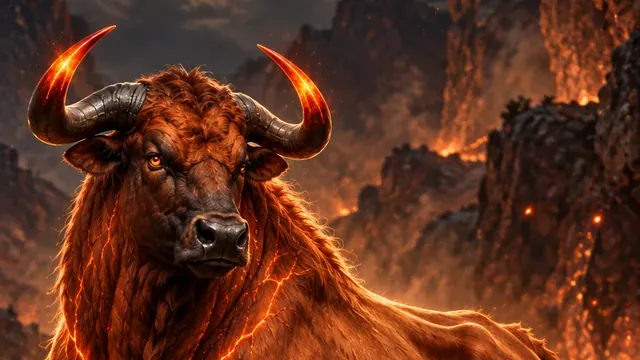
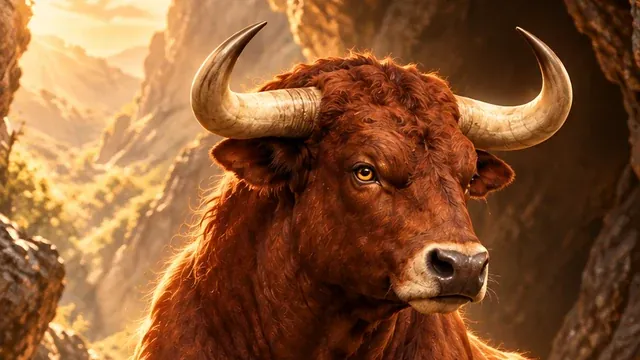
Herensuge is a seven-headed dragon who demanded tribute of maidens from the terrified villages of Euskal Herria. He guarded immense treasures in the depths of bottomless caves, surrounded by the bones of countless victims. His image condenses the most fearsome side of the dragon in Basque tradition.
Saint Michael or brave local heroes managed to kill him in legendary combat, freeing the land from his monstrous yoke. He represents primordial evil that must be defeated by the forces of good, a universal theme adapted to the Basque landscape.
Lairs where Herensuge guarded immense treasures.
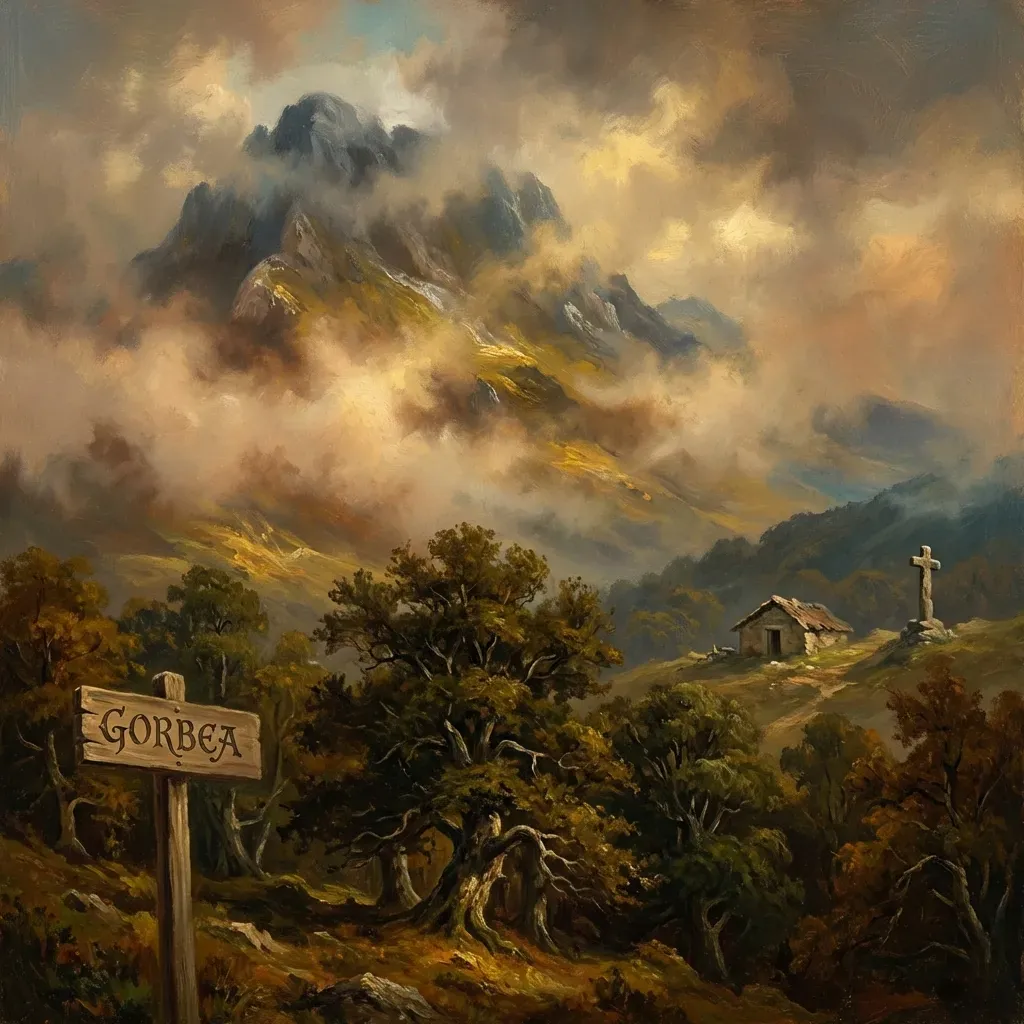
The place where the archangel defeated the dragon according to legend.
The territory where Herensuge demanded tribute of maidens.
The name Herensuge comes from Basque: heren, a part or portion, and suge, serpent. It evokes a multiplied or monstrous serpent with several heads.
Herensuge appears in many legends as the adversary of heroes and saints. His ability to fly and breathe fire makes him the quintessential dragon of Basque mythology.
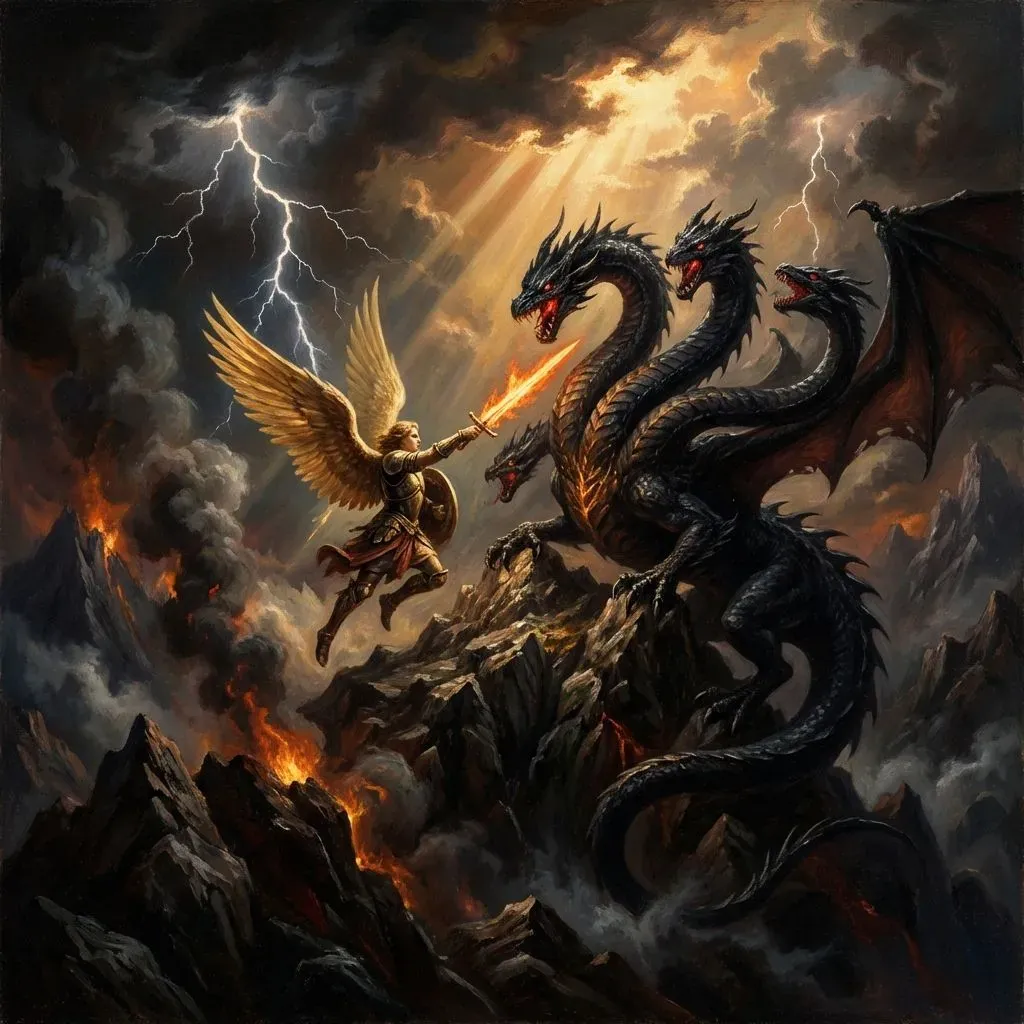
The archangel's battle against the seven-headed monster.
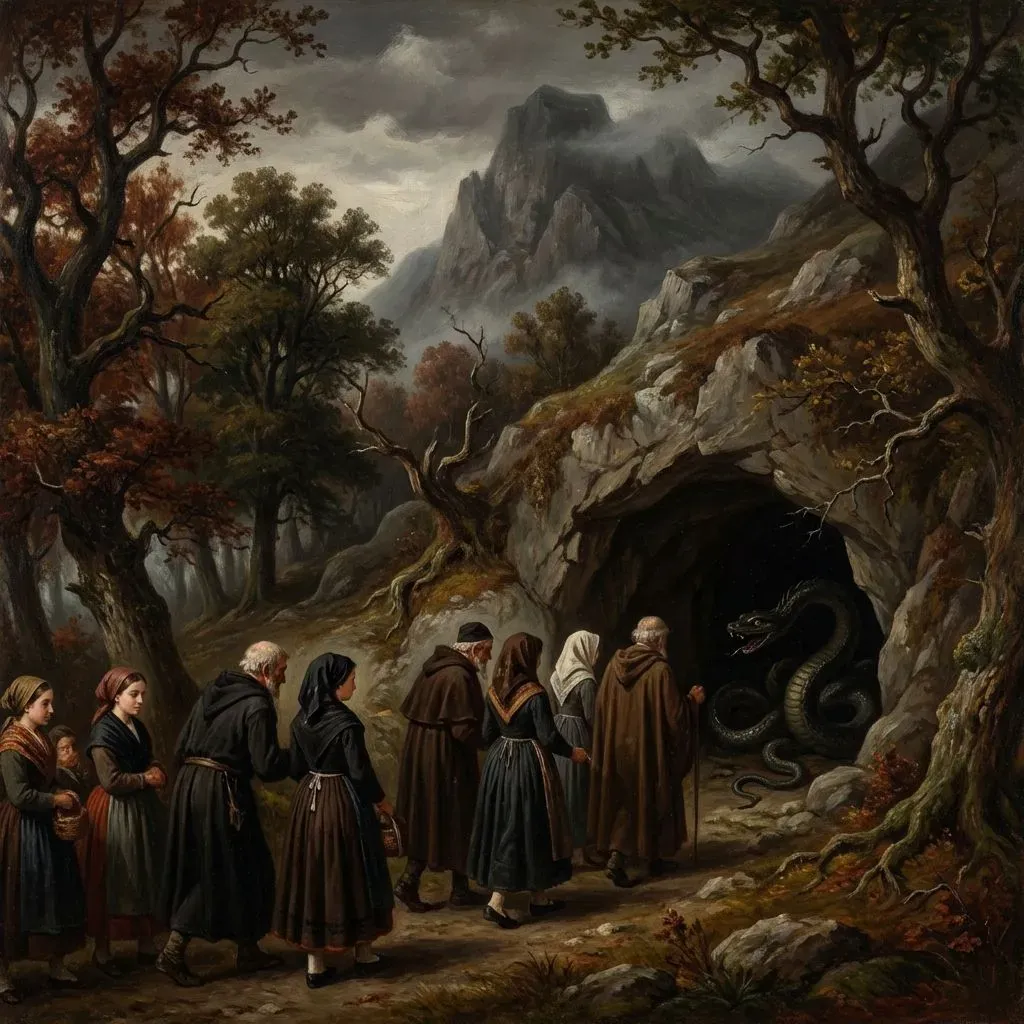
The terrible price Herensuge demanded from the surrounding villages.
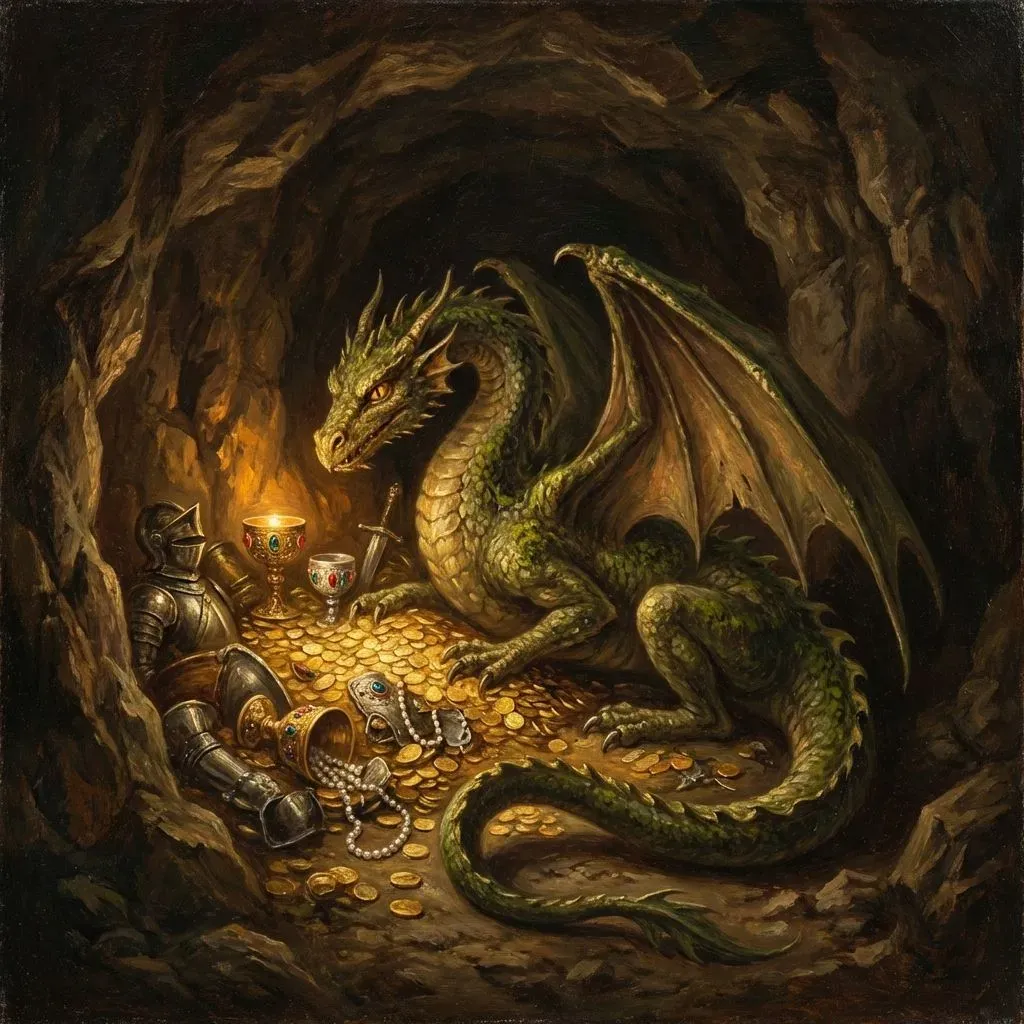
The riches that Herensuge guarded in his cave.
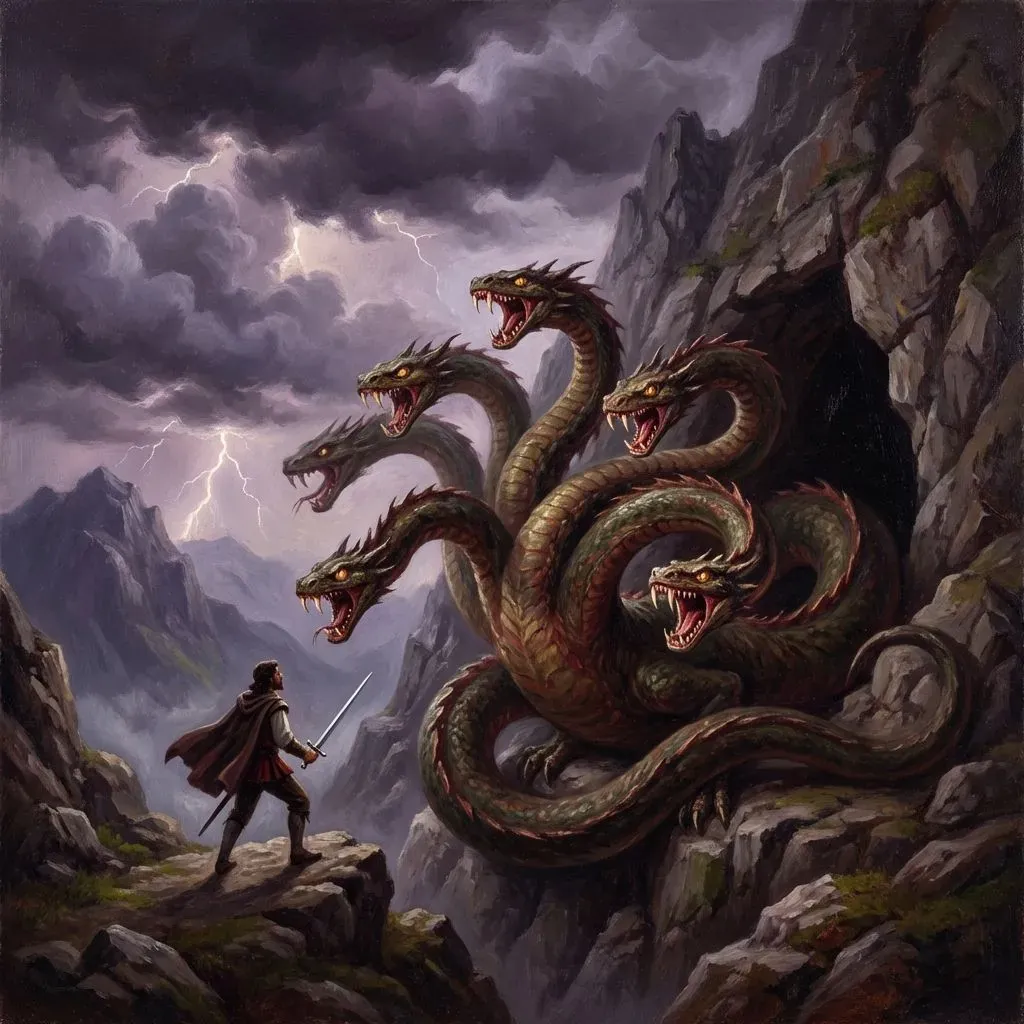
Herensuge belongs to the oldest layer of Basque mythology and can be understood as the many headed dragon of terror and tribute.
Its stories are closely tied to caves, treasure, sacrifice and heroic defeat.
Brings together terrifying deities and the timeless figure of the mythological saving hero.
Again and again the tradition returns to fire, villages, treasure and violence.
Rather than a decorative figure, Herensuge helps explain how the Basque world understood danger, order and sacred space.
In many versions, Herensuge marks a frontier between what belongs to human life and what must remain respected from a distance.