Teodosius of Goñi
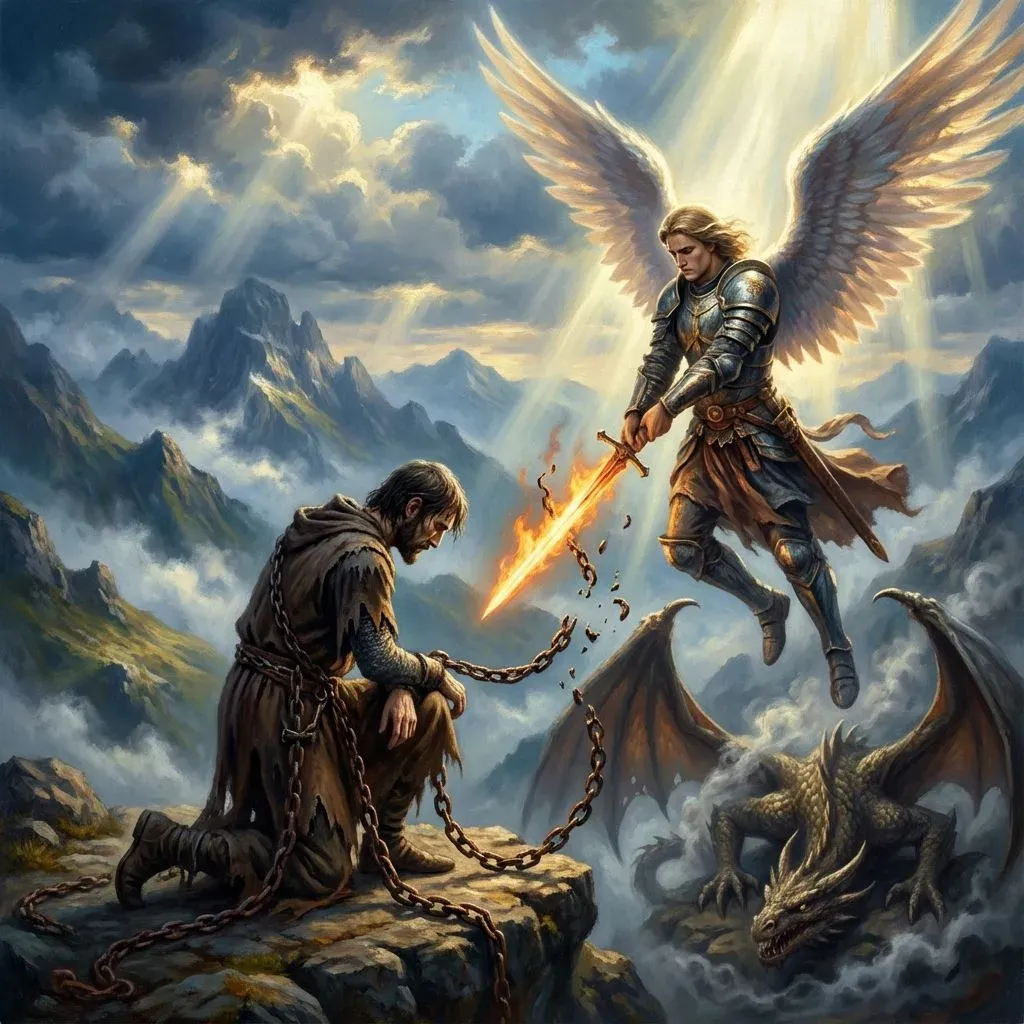
The Navarrese knight who, deceived by the devil, committed parricide and wandered in chains until Saint Michael freed him at Aralar.
— Nafarroa / Gipuzkoa —
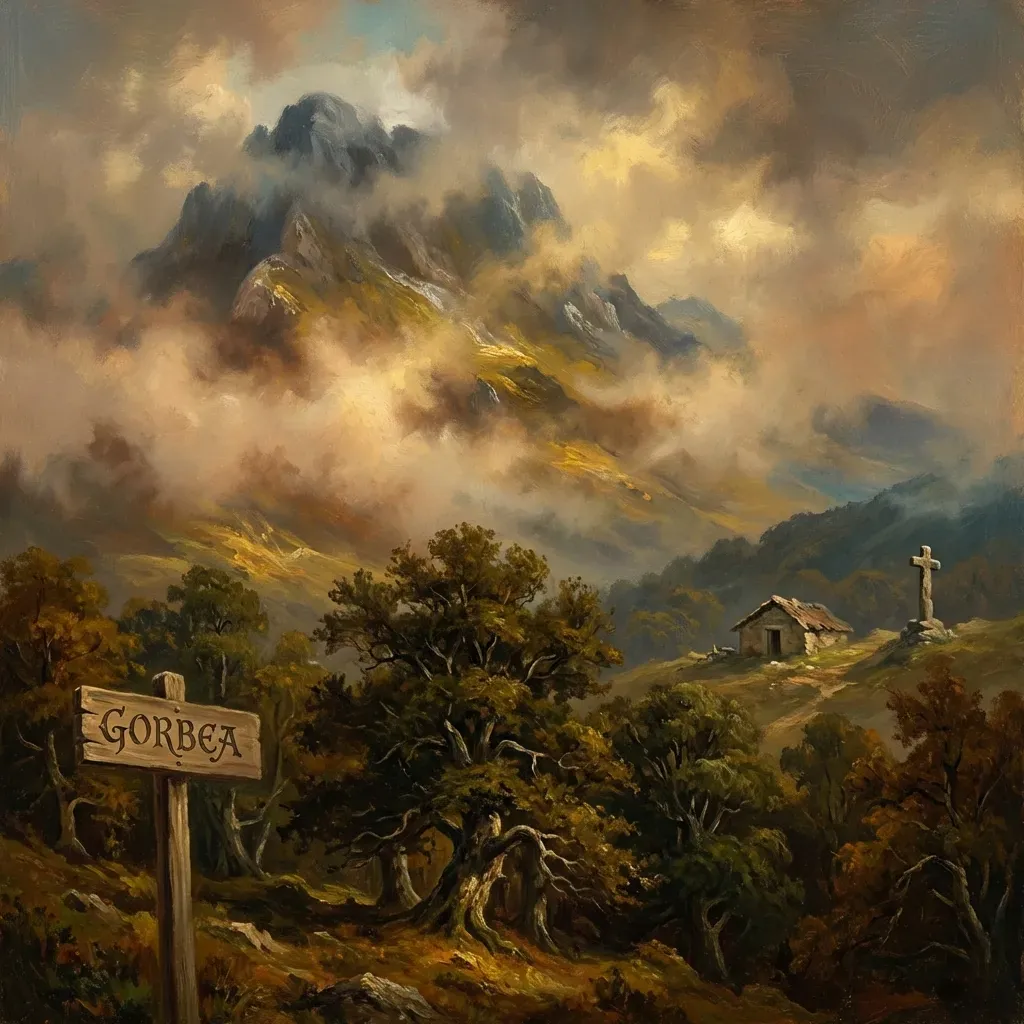
The Aralar range stretches across Navarre and Gipuzkoa, crowned by peaks rising above 1,400 metres. This broad upland landscape of pastures, limestone ridges and mist-laden summits is one of the great sacred territories of Basque tradition.
At the top of Aralar stands the Sanctuary of Saint Michael, one of the most important pilgrimage centres in Euskal Herria. The legend of Teodosius of Goñi, the chained penitent freed by the archangel after defeating the dragon, is deeply bound to this mountain sanctuary.
But Aralar is also land of dolmens and cromlechs that testify to human presence for more than five thousand years. Even today shepherds bring their flocks to the uplands, preserving a way of life that reinforces the ancient bond between mountain, ritual and community.
The range offers countless hiking possibilities, from family walks to multi-day traverses. Aralar Natural Park protects this territory and allows visitors to discover an extraordinary heritage where nature, myth and pastoral memory still remain intertwined.
The Navarrese knight who, deceived by the devil, committed parricide and wandered in chains until Saint Michael freed him at Aralar.
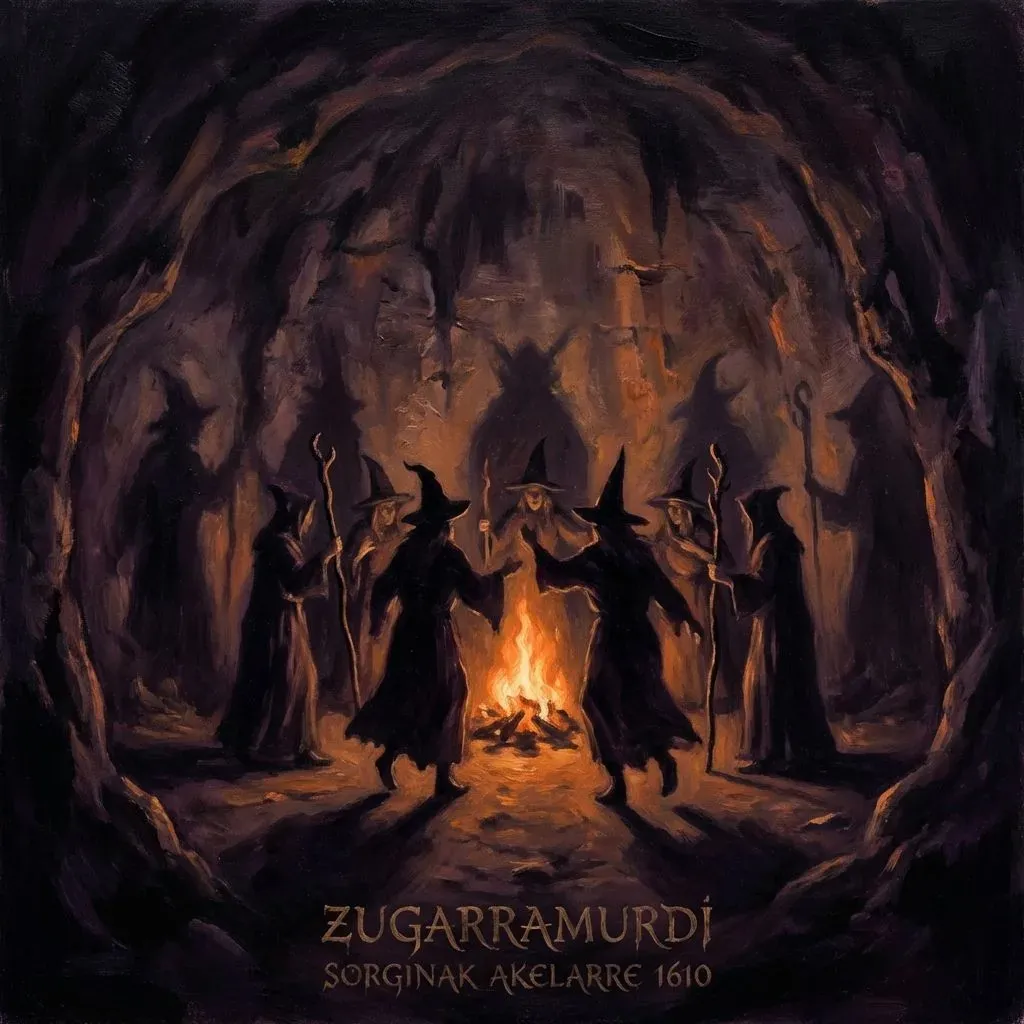
The famous inquisitorial trial of 1610 against the Navarrese witches who held akelarres in the sacred cave.
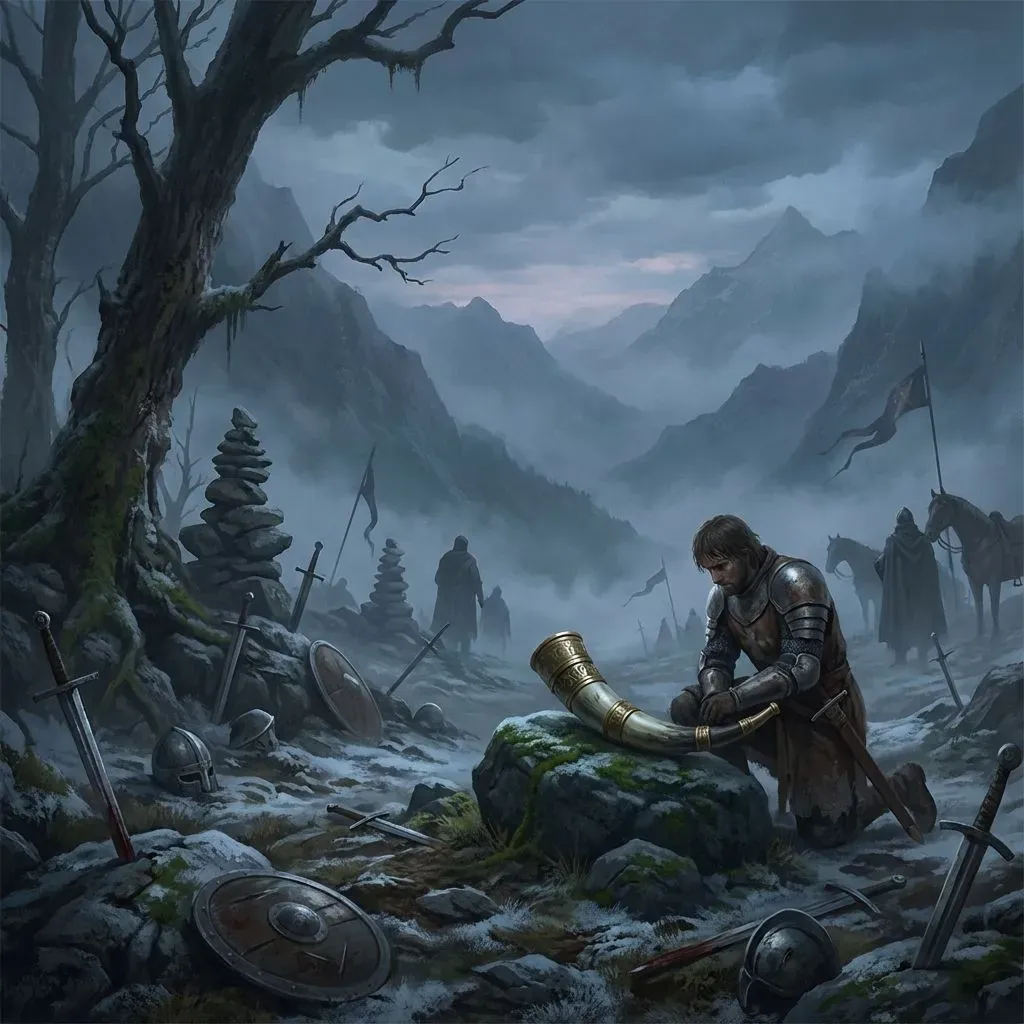
The Basque ambush against Charlemagne's army in the Pyrenean pass where the legendary Roland fell.
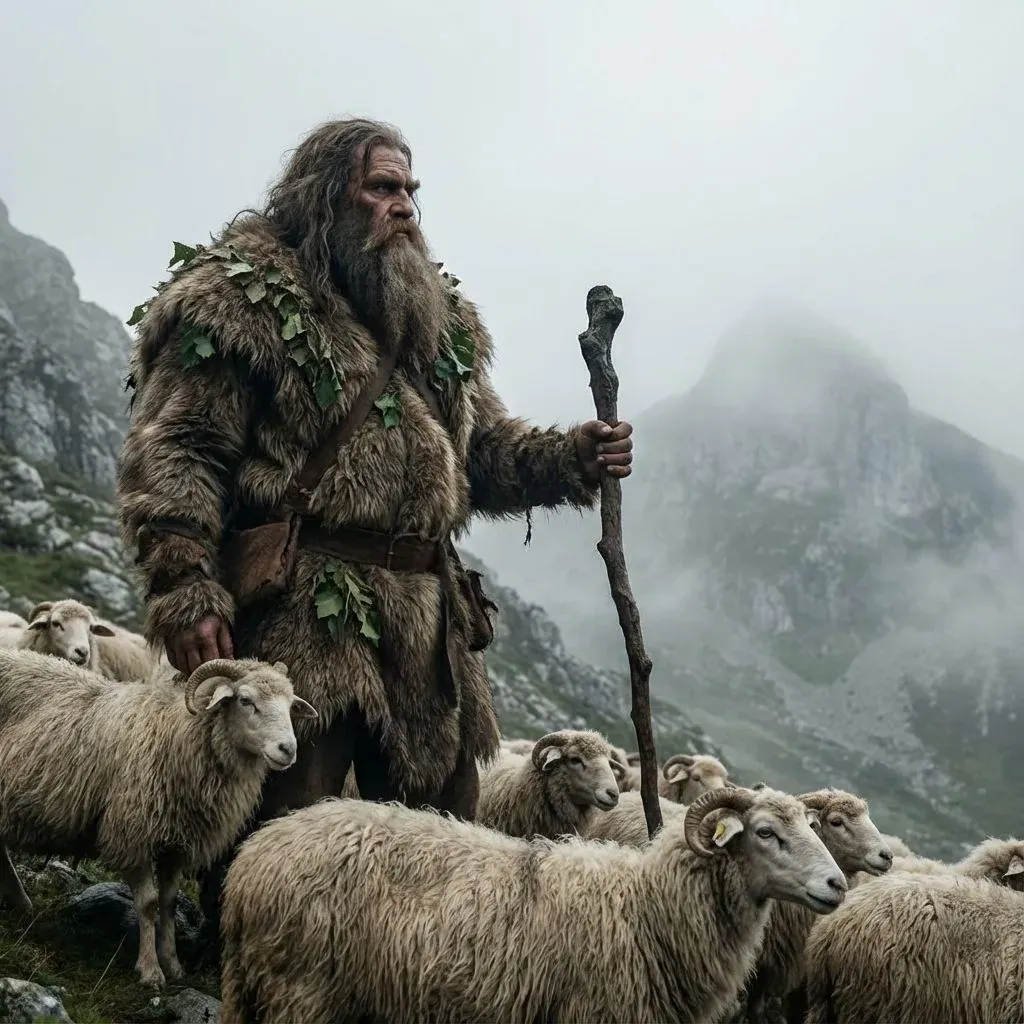
The shaggy giant who lives in the forests, protector of flocks and guardian of the secrets of agriculture and the forge.
Seductive nymphs who dwell in rivers and springs, recognisable by bird feet or fish tails, combing their hair with golden combs.
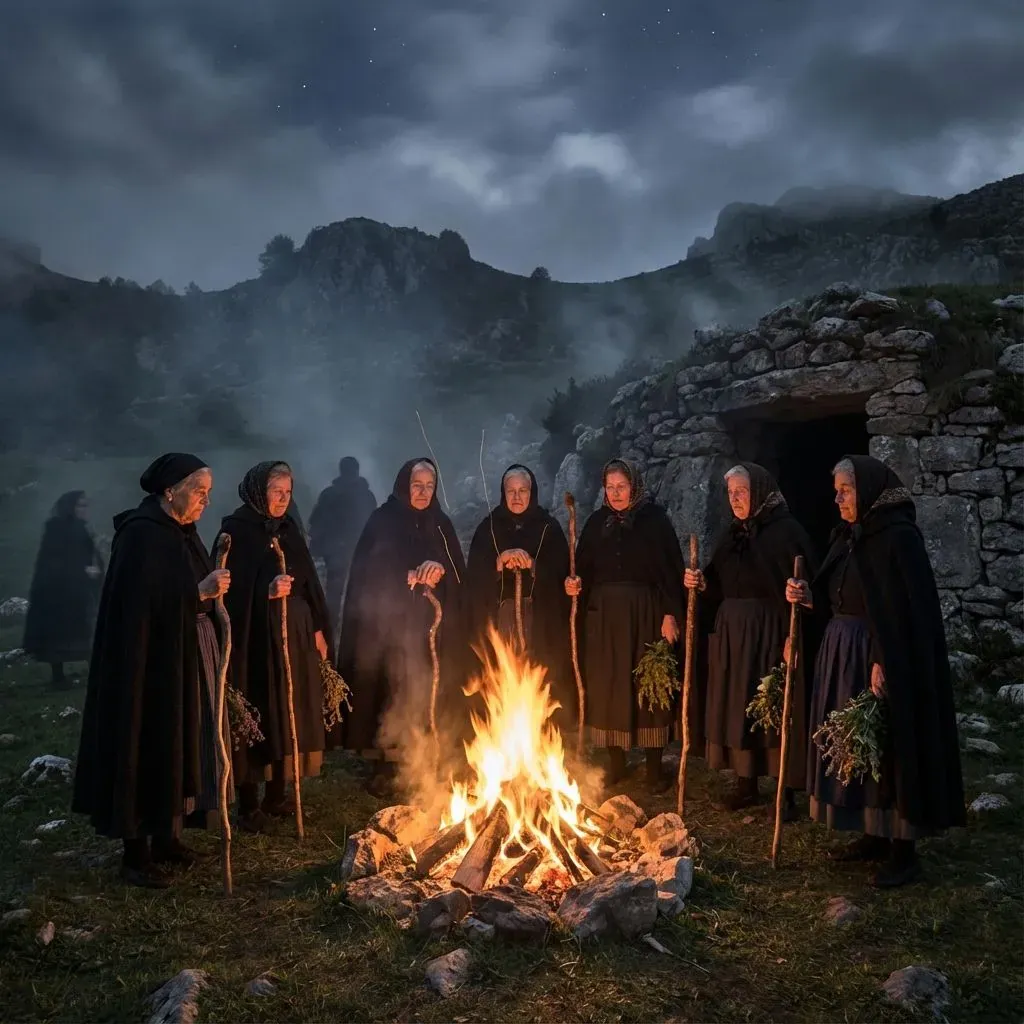
The Basque witches and wise women, priestesses of Mari who mastered potions, curses and the art of flying through the night sky.
The Aralar range, extending between Gipuzkoa and Navarre at an average elevation above a thousand metres, is one of the western Pyrenees’ most striking landscapes and richest repositories of sacred history. Its broad upland pastures, grazed by latxa sheep since time immemorial, contain such a remarkable density of megalithic monuments that any walk becomes an unplanned journey into the Neolithic.
The sanctuary of San Miguel de Aralar, nestled in a hollow at 1,220 metres, is a meeting point for the sacred traditions that have crossed this territory. Beneath the Christian dedication to the dragon-slaying archangel lies the memory of a much older place of worship, where pastoral communities sought the intervention of the forces governing the weather and the fertility of the pastures.
The roughly forty documented megalithic monuments in Aralar form one of the Iberian Peninsula’s major concentrations. Popular tradition consistently attributes them to the Jentilak, the pre-Roman giants regarded in Basque mythology as the territory’s first inhabitants. That these colossal beings chose Aralar as a principal home reveals the symbolic weight this landscape has carried since the beginnings of human presence here.
Walking through Aralar today, among centuries-old beeches and upland meadows swept by an insistent wind, helps explain why visitors feel more than aesthetic admiration. The place has a quality that resists rational explanation without requiring anything supernatural: accumulated human history makes it tangibly different from other places with equally spectacular views.