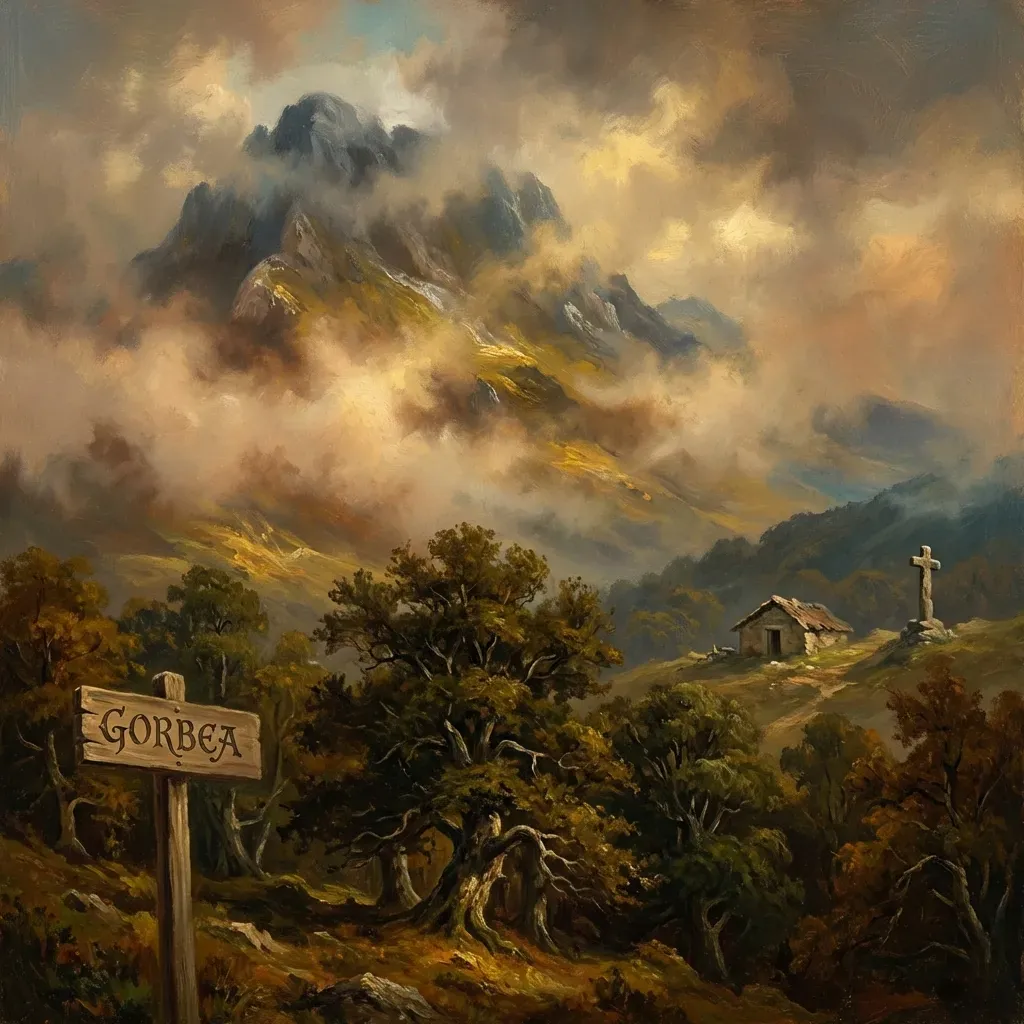
Mount Anboto
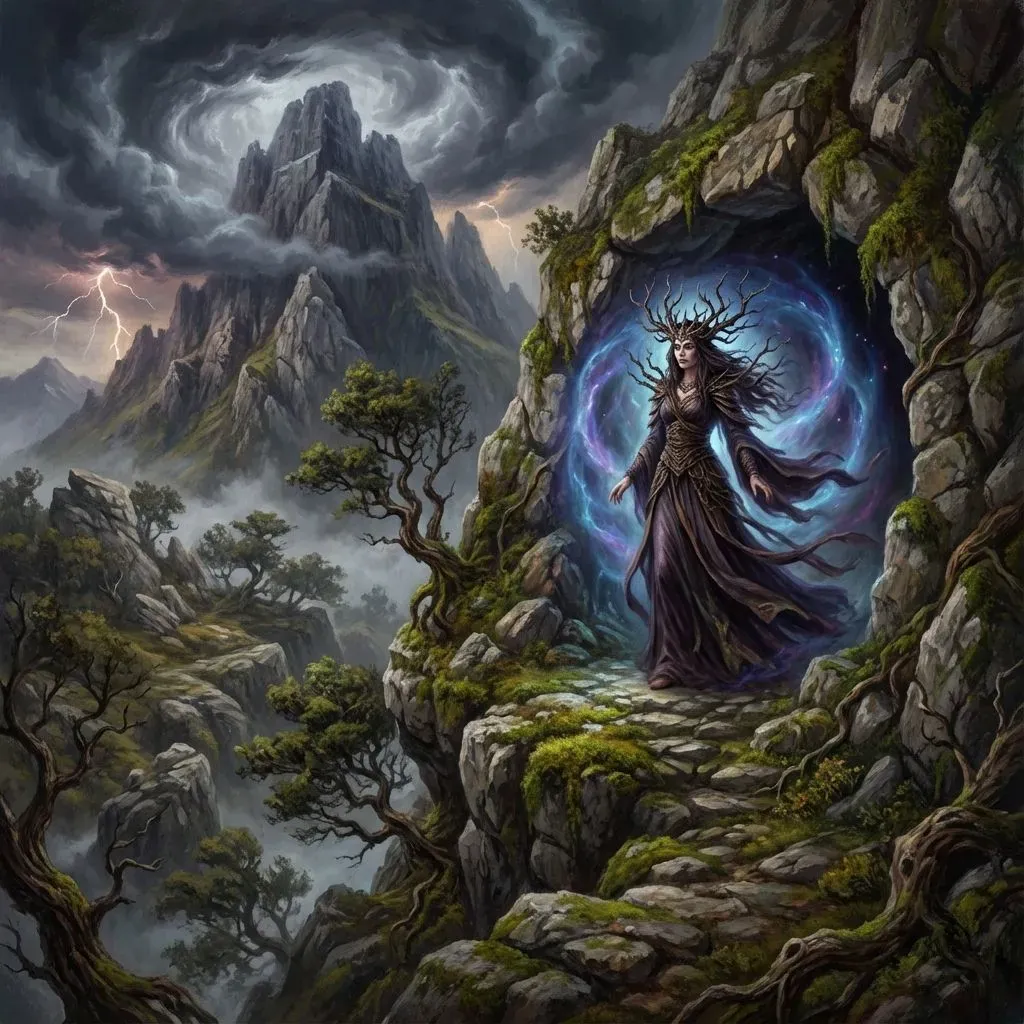
Mari's cave, where the twins were born and raised.
? How Atarrabi fled Mari's prison ?
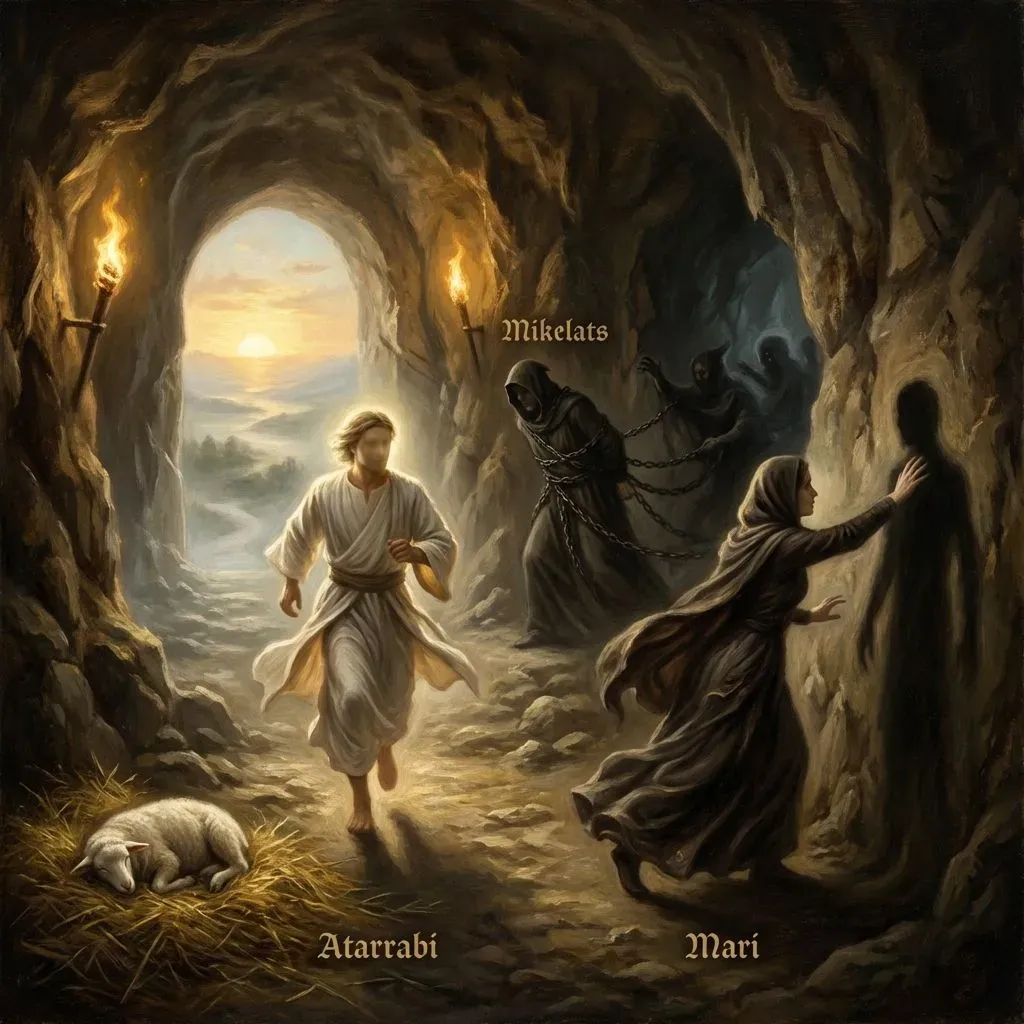
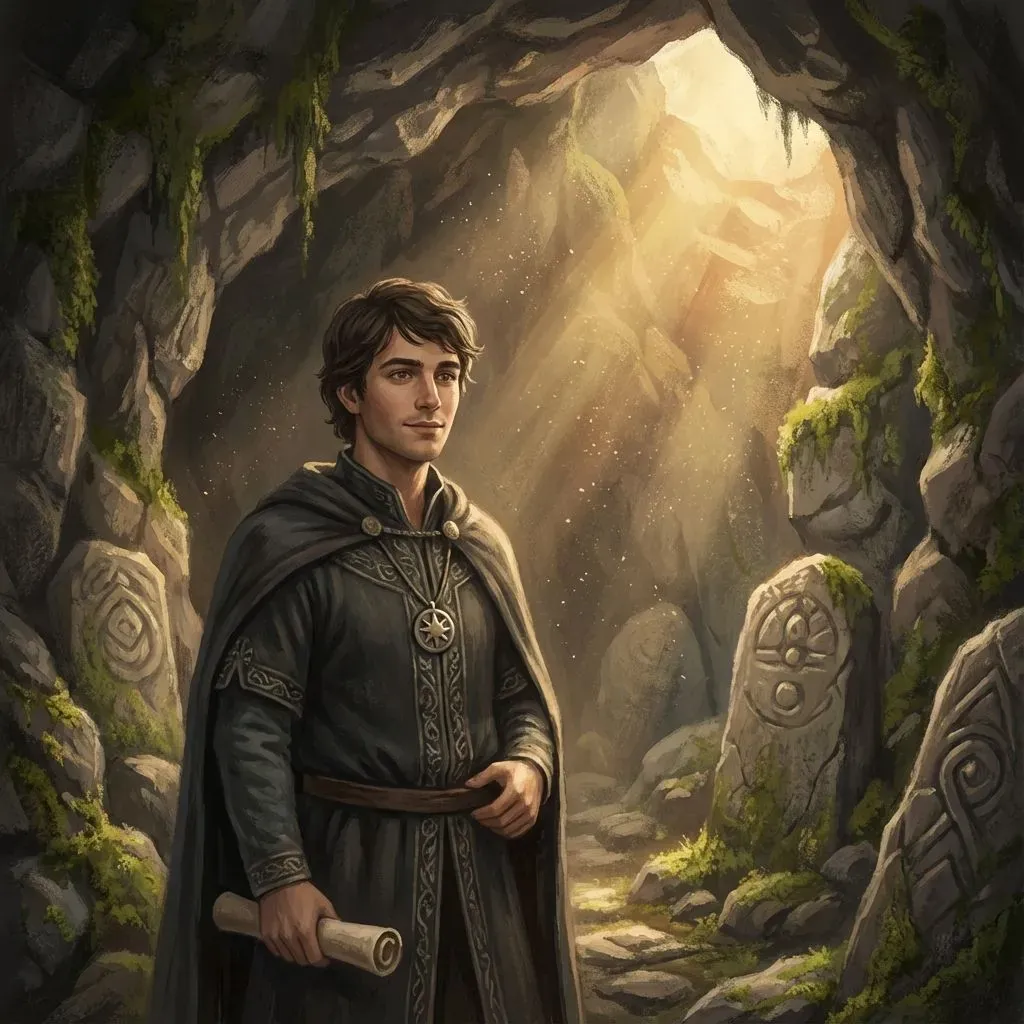
Atarrabi and Mikelats were the twin sons of Mari, the mother goddess, and Sugaar, the fire serpent. Born in the depths of the cave of Anboto, they lived enclosed beneath their mother's watchful gaze, knowing neither the outer world nor the light of the sun.
One day Atarrabi, the luminous brother, decided that he must escape in order to know humankind and help them with his knowledge. He devised an ingenious plan: he waited until Mari fell asleep and placed a white sheep beneath the blankets in his place. Meanwhile, he asked his brother Mikelats to help him flee.
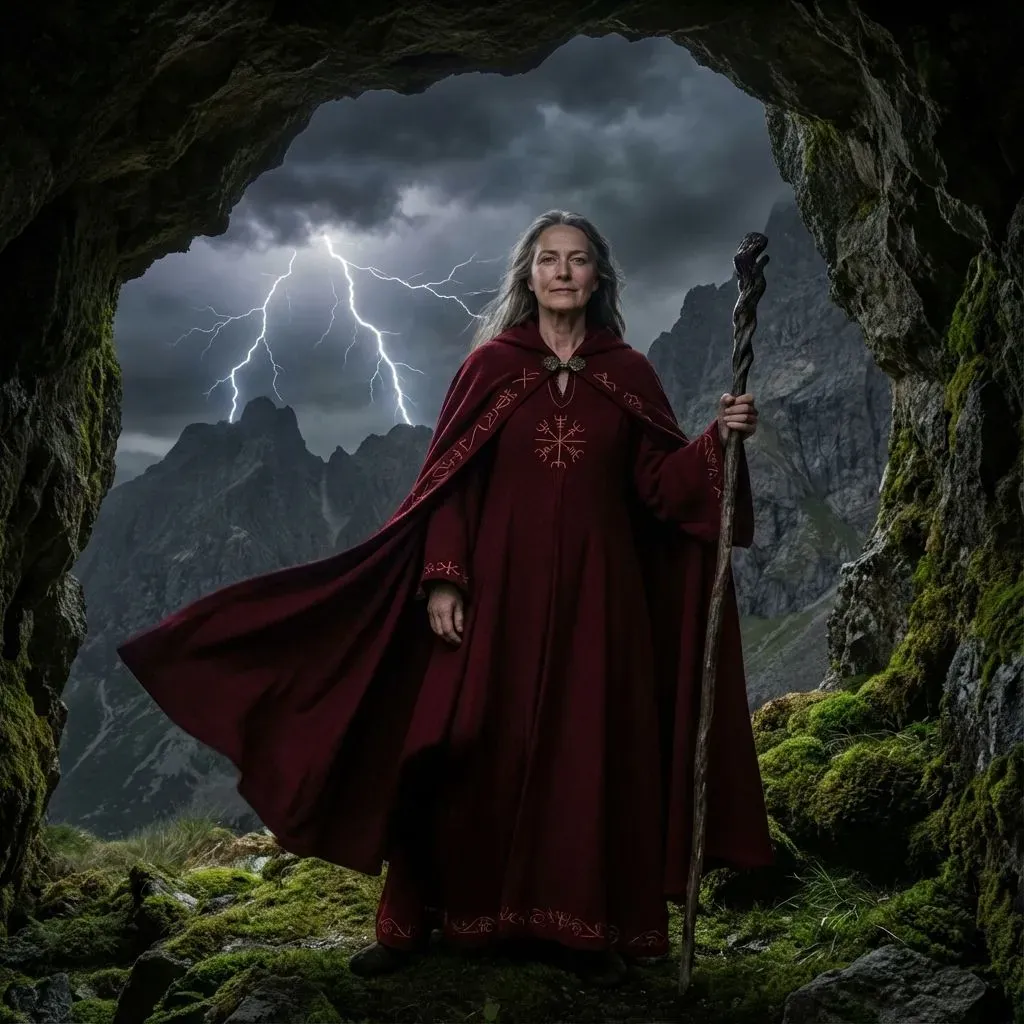
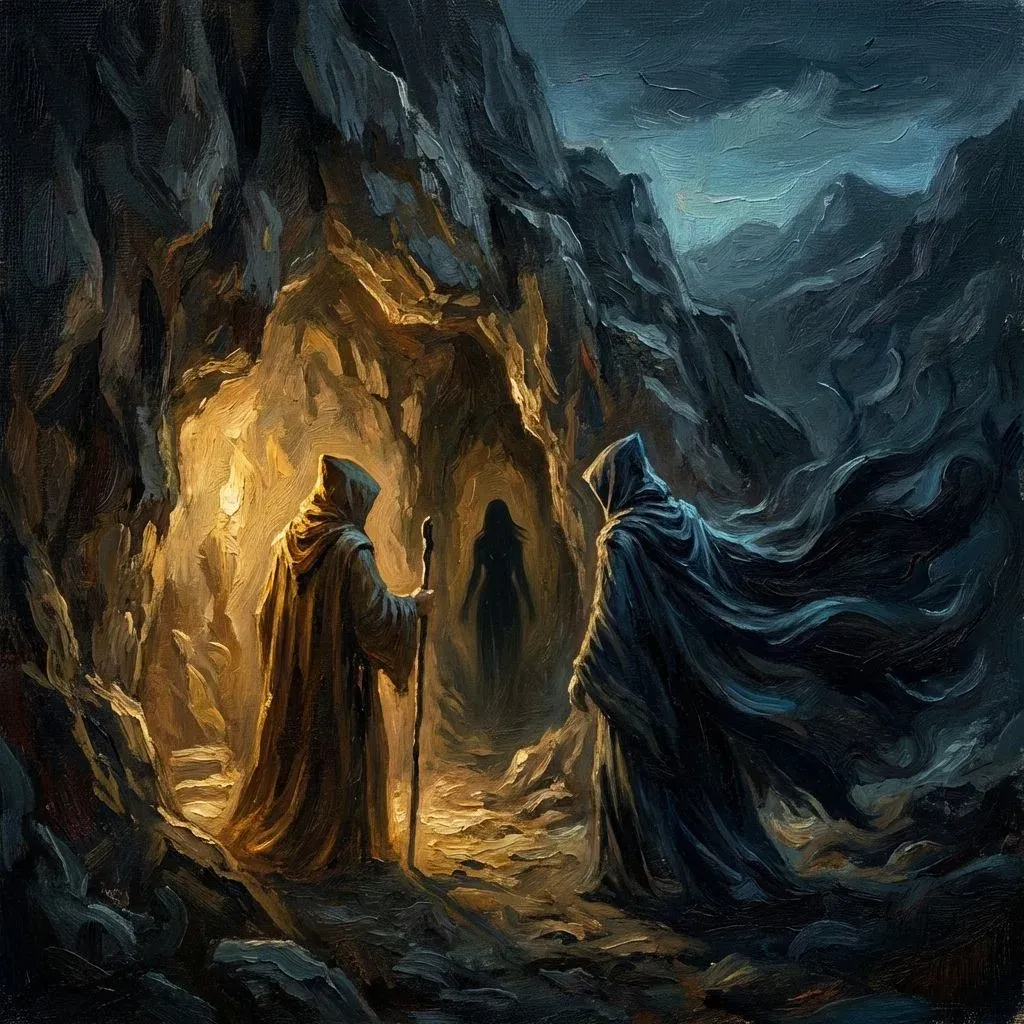
Mari, however, possessed a special power: she could hold back anyone whose shadow touched her while leaving the cave. When Atarrabi ran toward the light, his shadow was trapped for an instant beneath Mari's feet. Thanks to the speed of dawn and the purity of his heart, he managed to break free and escape into the outside world.
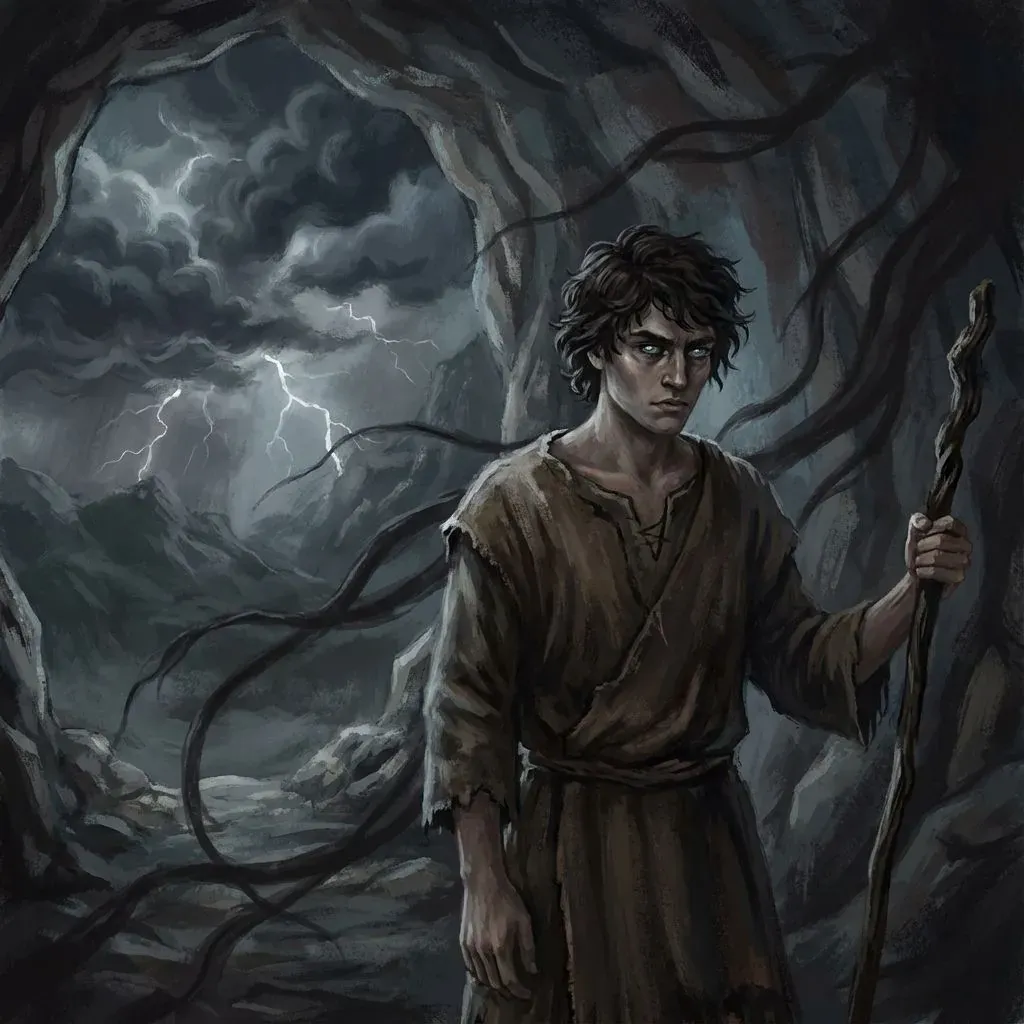
Mikelats, darker in nature and less agile, tried to follow him, but his shadow was caught completely by Mari. He remained chained forever in the depths of the cave, condemned to live in eternal darkness. Since then, Atarrabi walks among humans teaching wisdom, while Mikelats remains imprisoned, unleashing storms when his rage overflows.
In this legend, escape is not merely a physical act but a passage from the closed, maternal and sacred underworld into the uncertain space of human life. Atarrabi's departure marks the moment when knowledge leaves the cave and enters the world of mortals.
The story also explains why the two brothers follow opposite destinies. Atarrabi's purity and speed allow him to break away, while Mikelats remains bound to darkness below. Their divergence becomes one more expression of the dual structure that shapes Basque myth.
Mari's power over the shadow adds a profound symbolic layer. To be caught is not only to be physically detained, but to have part of one's being held by the chthonic force from which one emerged. Escape therefore demands not only cunning, but a moral and spiritual quality.
That is why the legend endured so strongly: it offers a dramatic image of liberation, but never without cost. One brother reaches the world of humans, and the other is lost to the depths, fixing forever the tension between wisdom and darkness.