Mountain paths
The paths that the Intxixu make disappear on foggy nights.
— When the Intxixu erase the mountain paths —
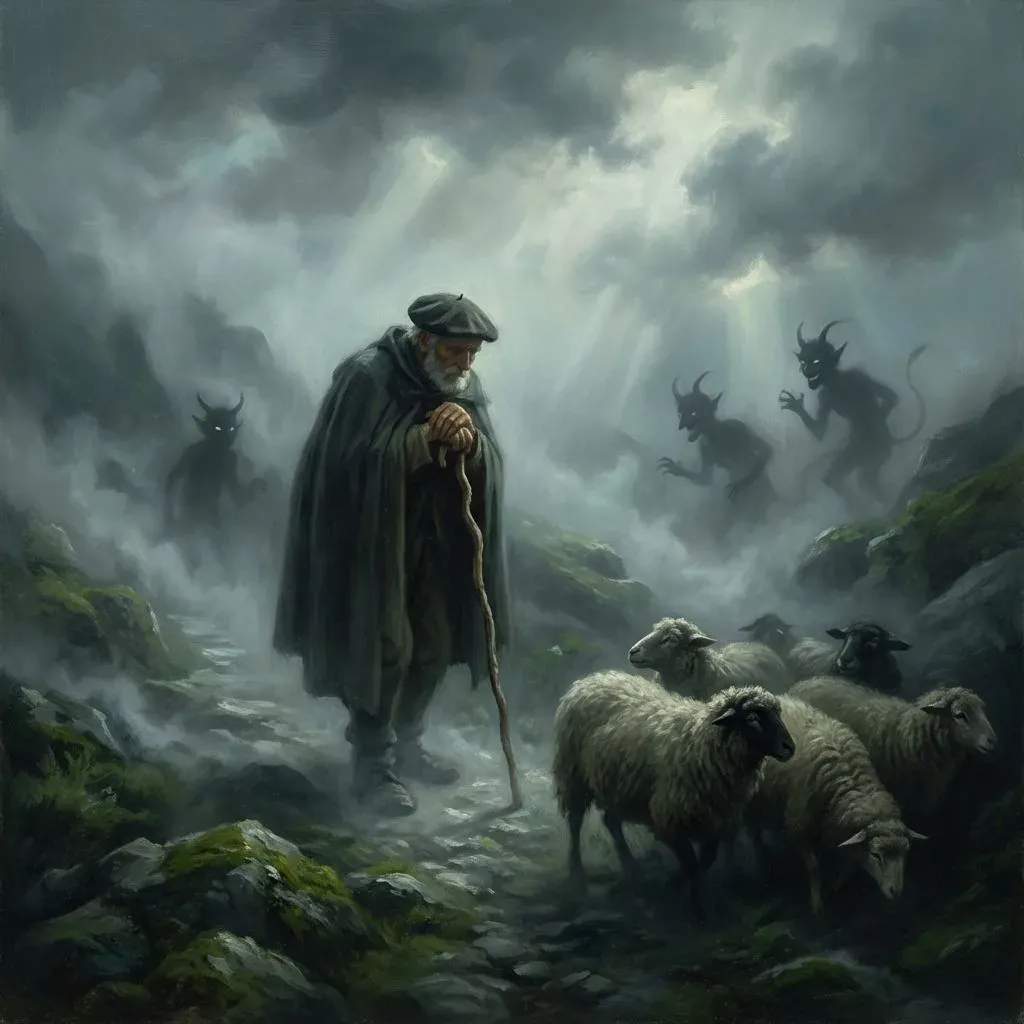
It was an autumn afternoon when Patxi, a shepherd from Zugarramurdi, was returning with his flock along the path he knew like the back of his hand. But thick mist descended from the mountain, so dense that he could barely see his own sheep. And in that haze he first heard the shrill laughter of the Intxixu.
At first he thought it was the wind whistling among the rocks. But the laughter multiplied, coming from everywhere and nowhere. When it stopped, the path had vanished. Where a trail worn by a thousand footsteps had been, there were only ferns and stones he had never seen before.
Patxi walked all night along what he thought was the way home. But whenever he believed he recognised a familiar marker, it moved or vanished before his eyes. And always that mocking laughter rang through the mist, as though someone very small found endless amusement in his misfortune.
At dawn, when the mist lifted, Patxi found himself exactly where he had started: beside the mountain spring. His flock grazed peacefully, as if nothing had happened. But the shepherd had aged ten years in a single night, and he never again walked alone when mist covered the summits.
The paths that the Intxixu make disappear on foggy nights.
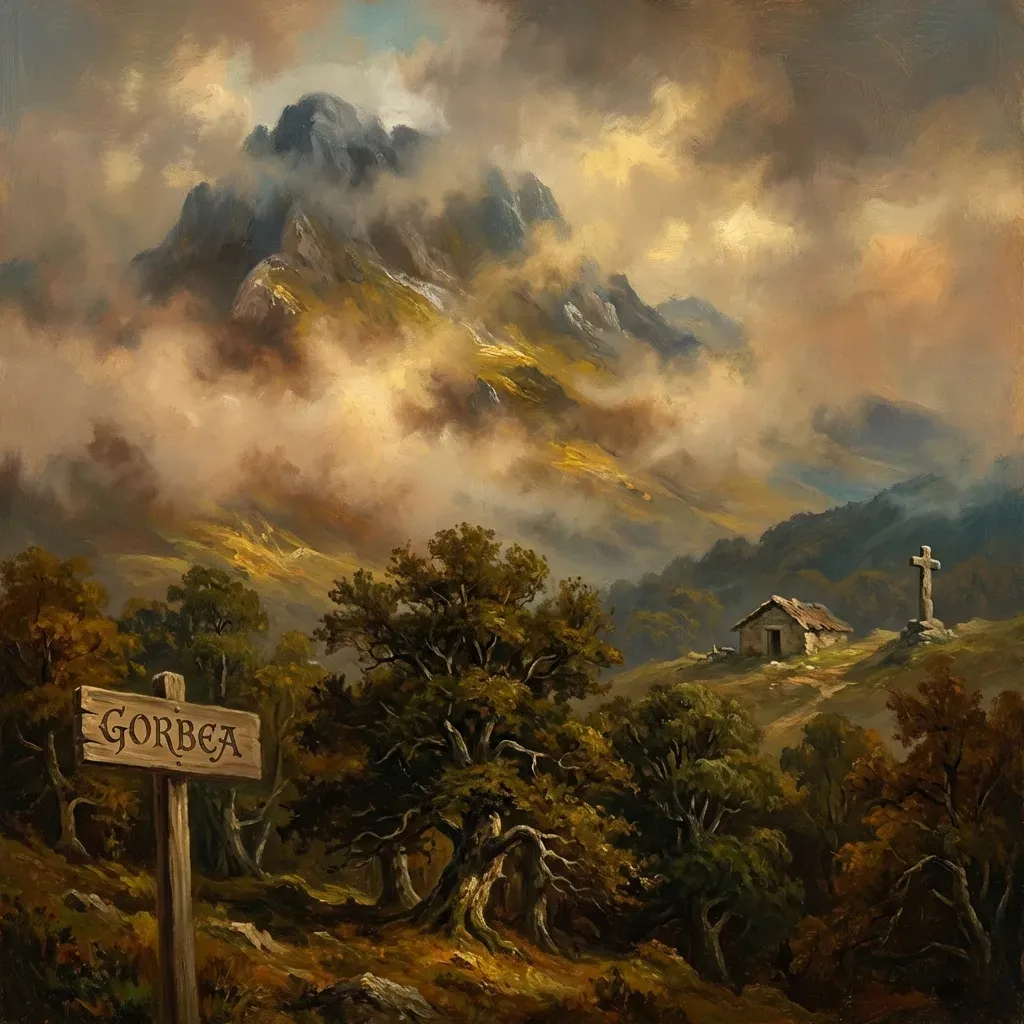
Places prone to mist where these mischievous spirits are active.
One of the most unsettling Basque traditional stories tells of an experienced shepherd who entered a small beech wood he had known all his life to find a stray sheep. The wood took no more than fifteen minutes to cross in any direction, yet the man needed three days to get out.
When he finally emerged into the clearing where his dog waited, the animal greeted him with a mixture of relief and bewilderment that confirmed the passing time had been real. The shepherd remembered neither eating nor sleeping, only walking on and on through what always seemed to be the same spot in the woods.
The traditional explanation was that he had been caught in the time of another being inhabiting the same geographical space in a different temporal dimension. The shepherd had walked for three days in the forest’s time while the outside world continued at its ordinary pace.
This experience of time becoming displaced in particular parts of the Basque landscape connects with similar phenomena recorded in Celtic and Nordic traditions. It suggests that some ancient cultures had a keen intuition of how the perception of time changes with place and the observer’s state of consciousness.