Teodosius of Goñi
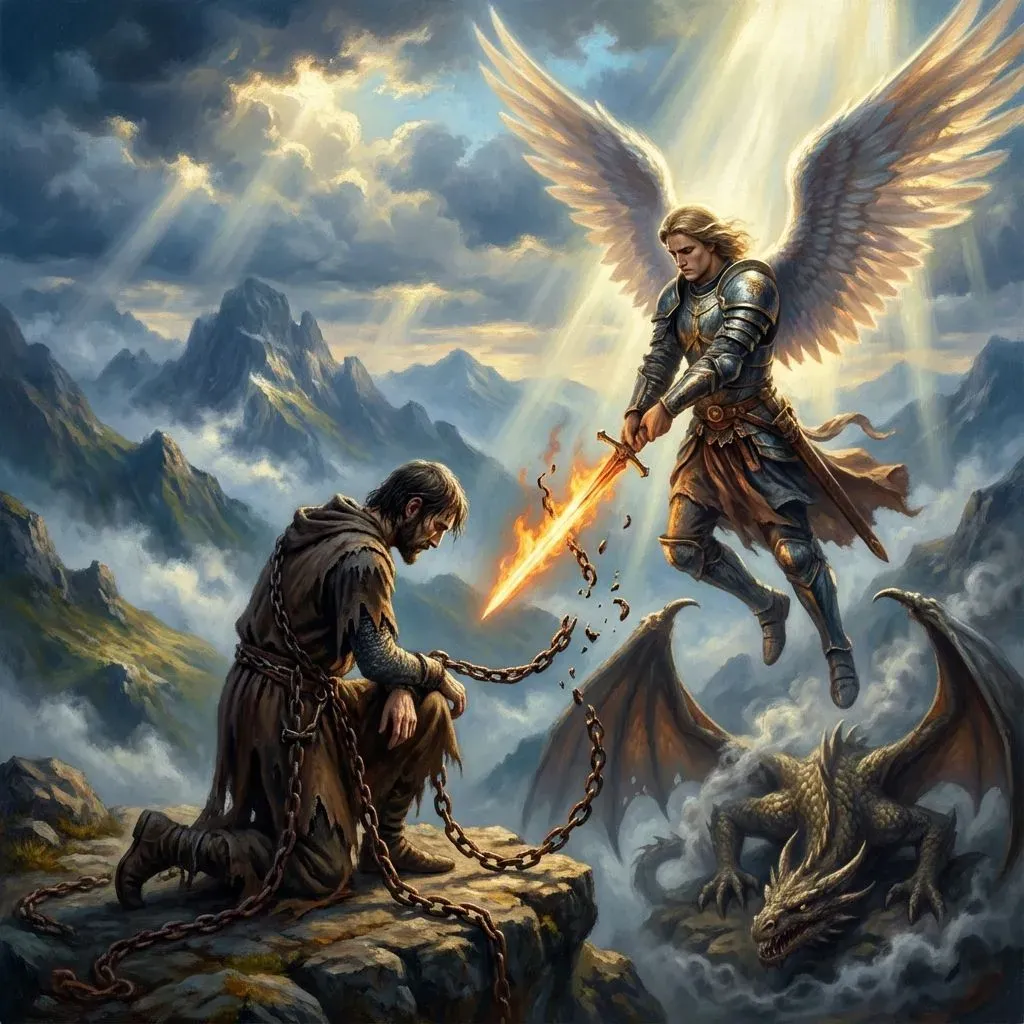
The Navarrese knight who, deceived by the devil, committed parricide and wandered in chains until Saint Michael freed him at Aralar.
— Nafarroa —
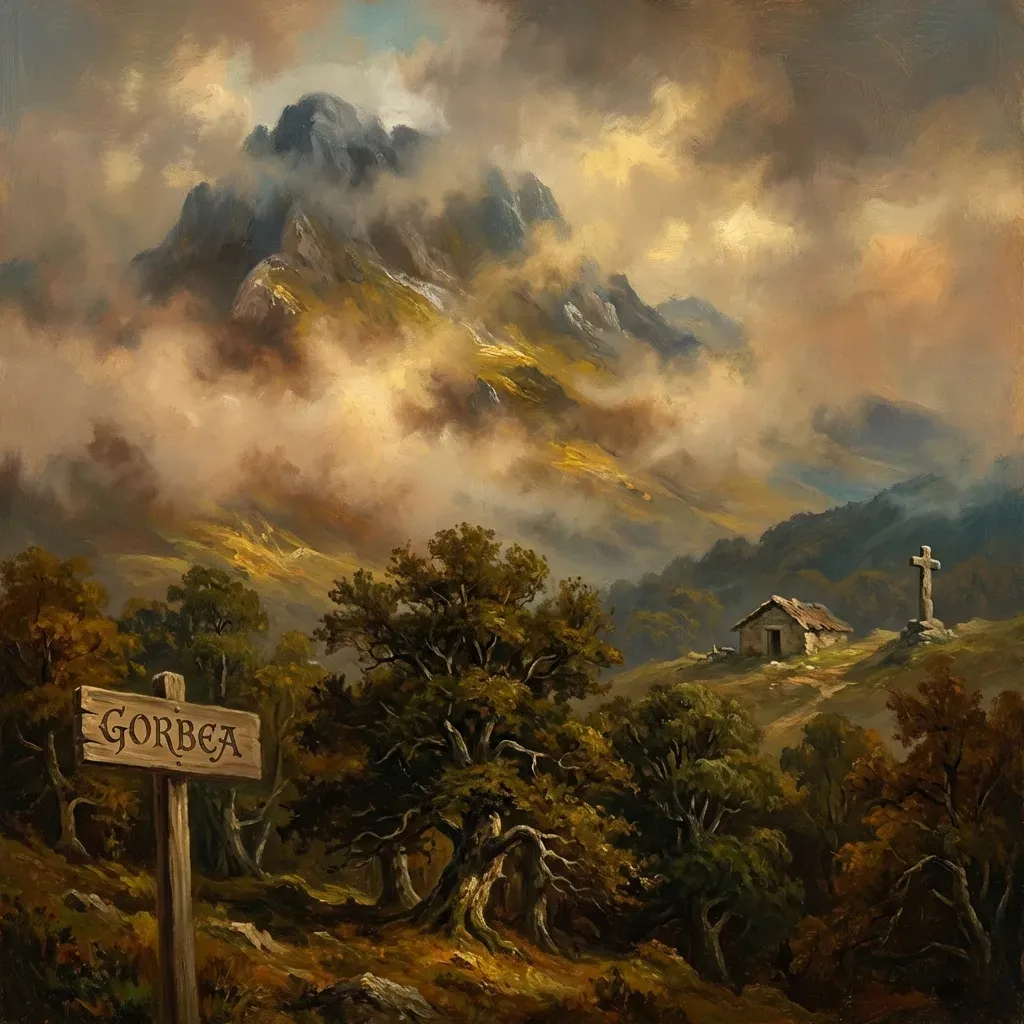
Altsasu, known in Spanish as Alsasua, is a town in northern Navarre set at a strategic crossroads between the Basque lands and the Castilian plateau. This position has long made it a place of passage, exchange and strong local identity in the western Pyrenees.
The town historically developed around the royal road linking Pamplona to the interior of the peninsula. The arrival of the railway in the nineteenth century reinforced its role as a communications hub, giving Altsasu a modern importance that overlays much older layers of rural and festive culture.
The surroundings of Altsasu offer major natural attractions. The Urbasa-Andia range, with its broad upland clearings and beech forests, and the Aralar Natural Park, with its mythical peaks, place the town within a landscape where carnival tradition, mountain routes and ancestral imagination still meet.
The town retains examples of traditional architecture and has an active cultural life. Its July patron saint festivities and lively streets reflect a community that has preserved its identity while adapting to modern times.
The Navarrese knight who, deceived by the devil, committed parricide and wandered in chains until Saint Michael freed him at Aralar.
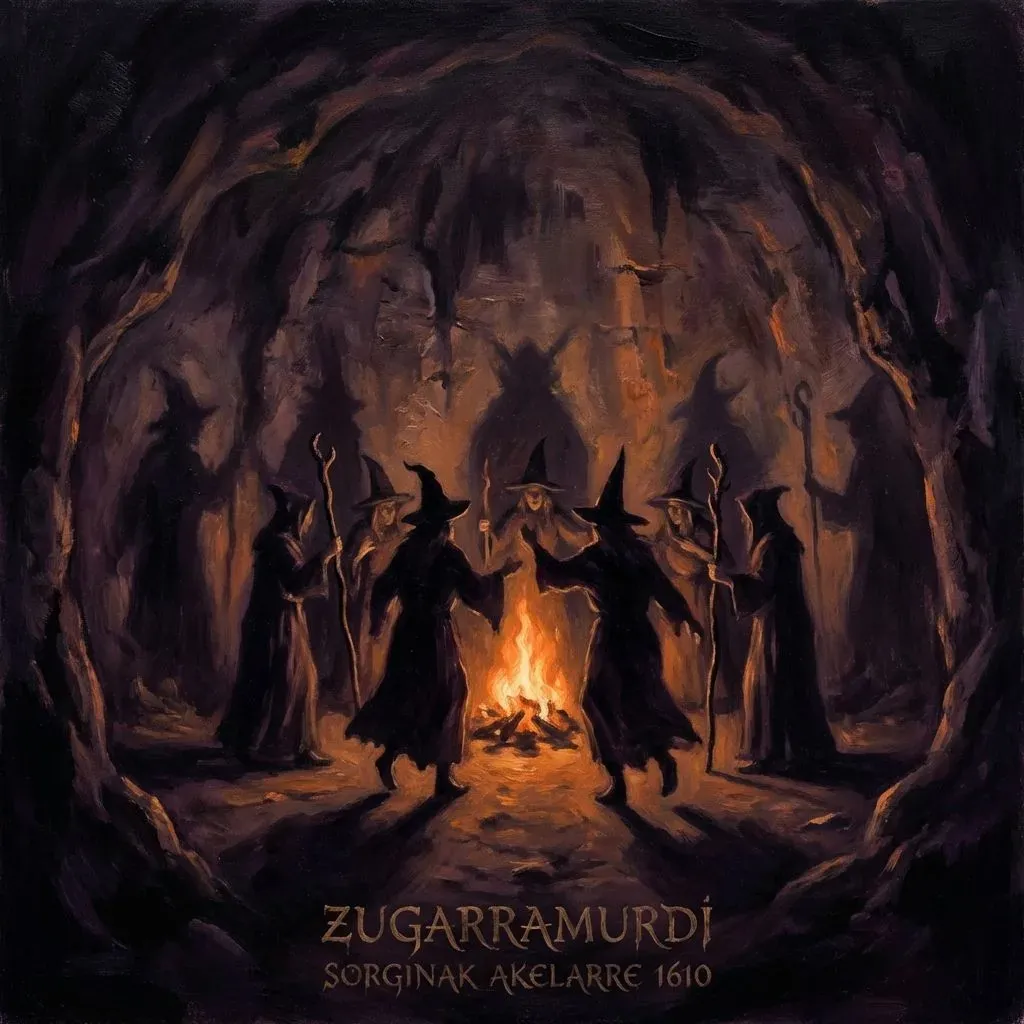
The famous inquisitorial trial of 1610 against the Navarrese witches who held akelarres in the sacred cave.
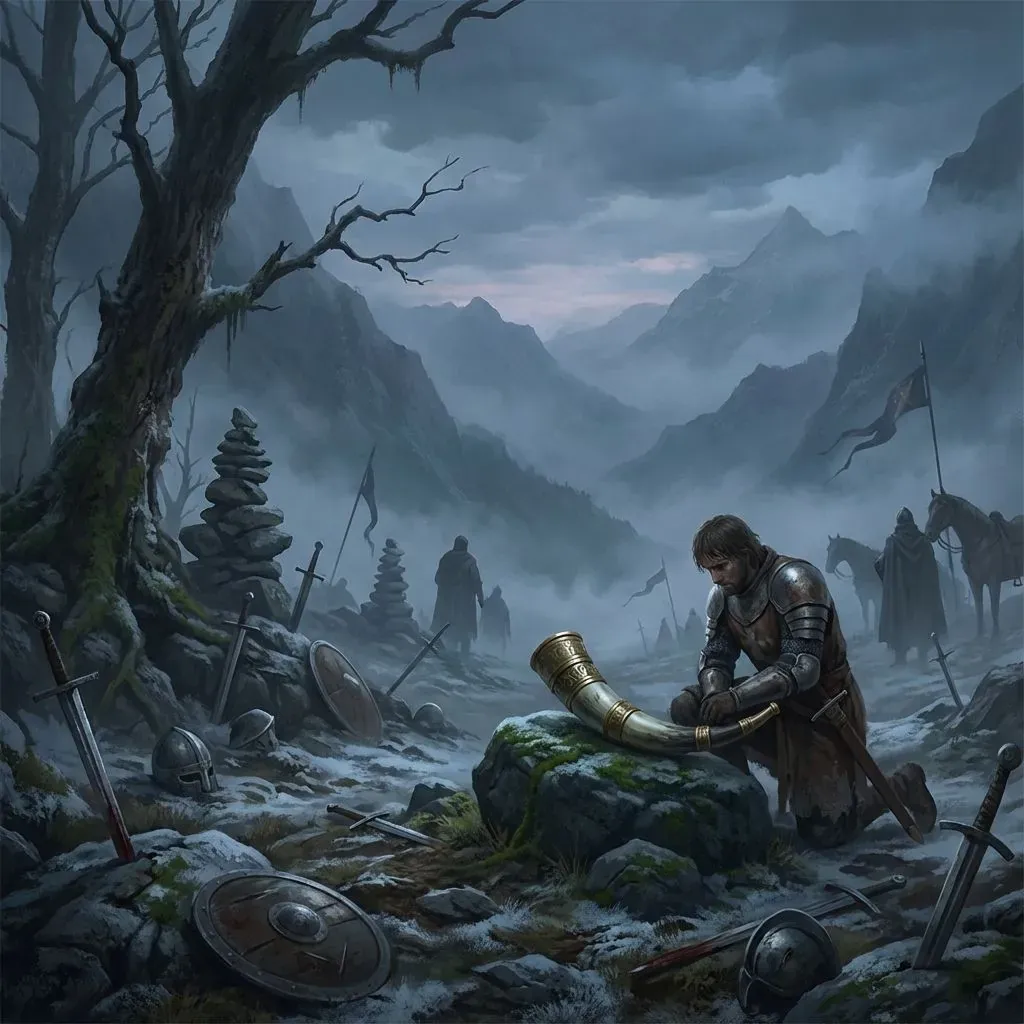
The Basque ambush against Charlemagne's army in the Pyrenean pass where the legendary Roland fell.
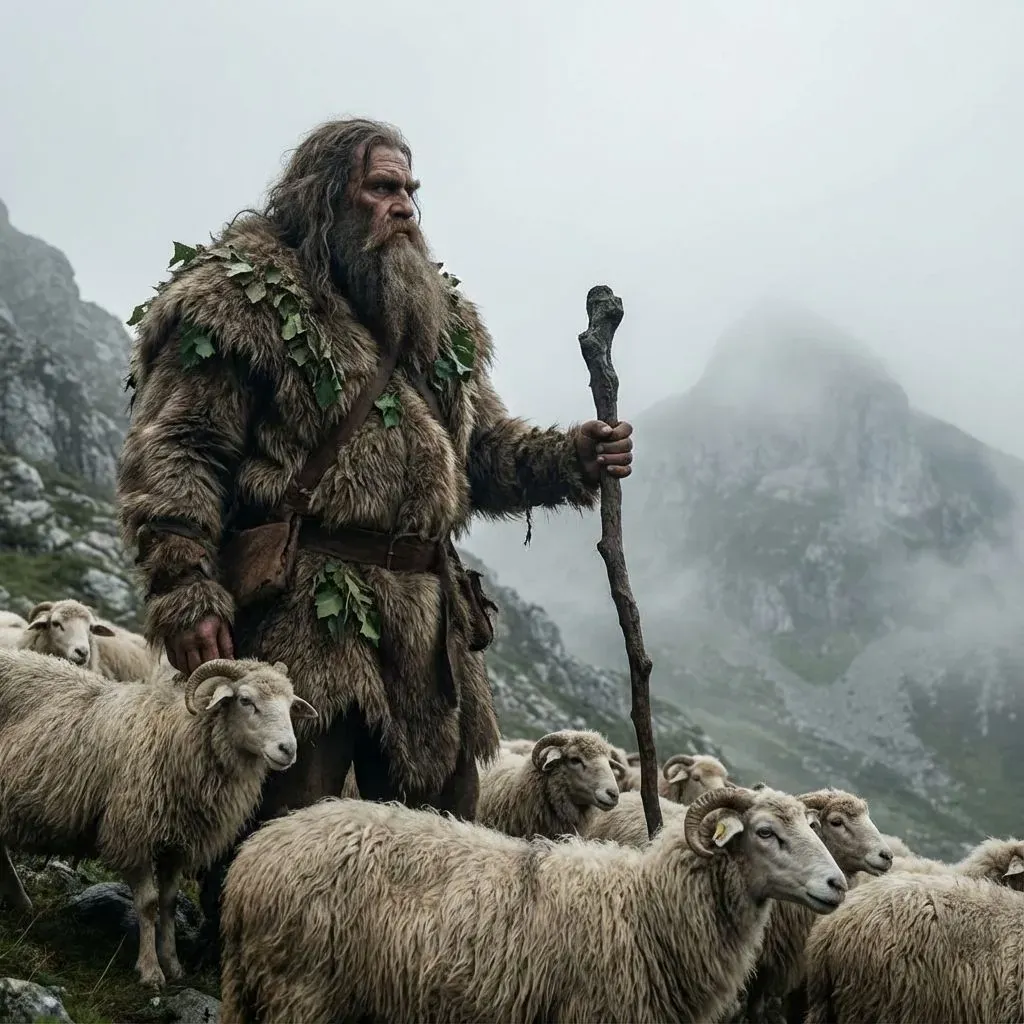
The shaggy giant who lives in the forests, protector of flocks and guardian of the secrets of agriculture and the forge.

Seductive nymphs who dwell in rivers and springs, recognisable by bird feet or fish tails, combing their hair with golden combs.
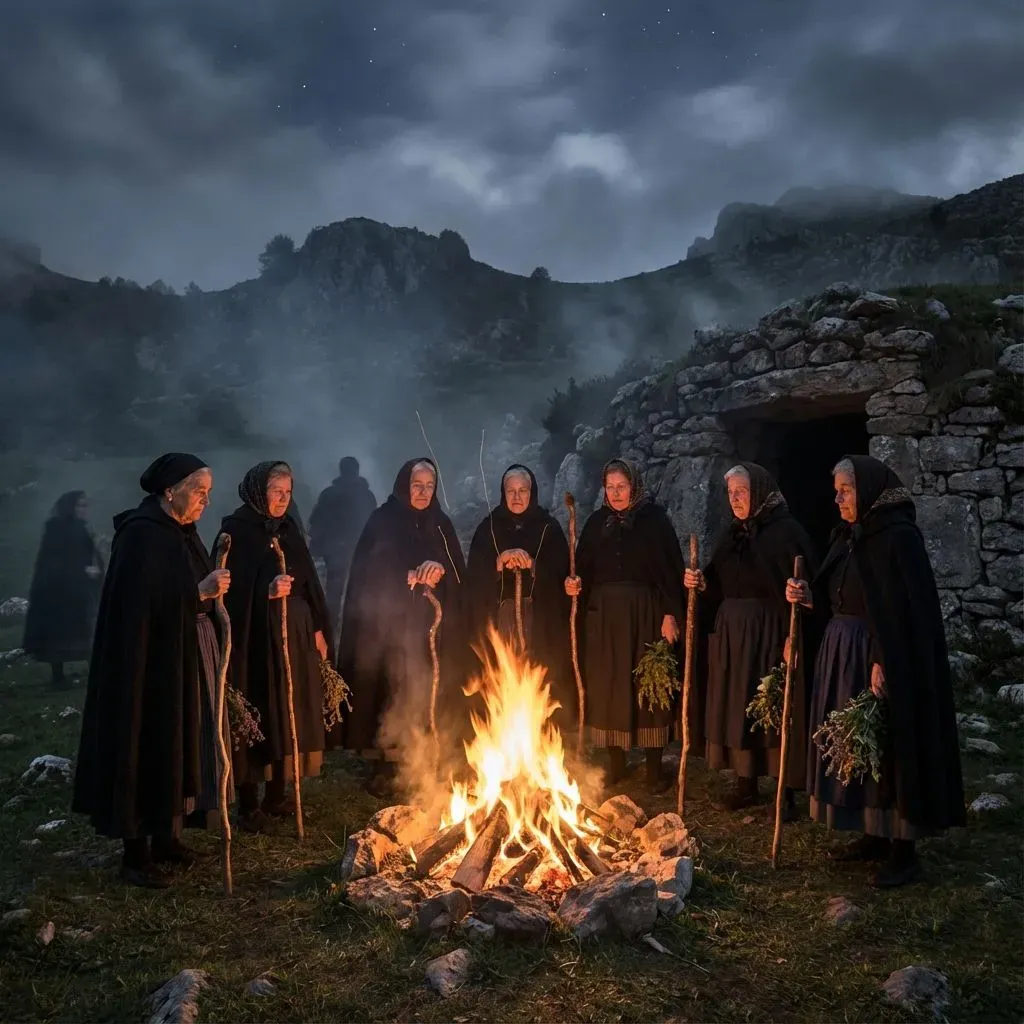
The Basque witches and wise women, priestesses of Mari who mastered potions, curses and the art of flying through the night sky.
Altsasu, in Navarre’s Sakana region, is known in Basque folklore for one of the territory’s most archaic and unsettling carnivals. The Momotxorroak, figures clad in sheepskins and goat horns representing winter’s wild forces, parade through the streets in February, inspiring fear and fascination in equal measure. Ethnologists trace the ritual’s roots to pre-Christian celebrations of seasonal renewal.
The Momotxorro does not strictly belong to the Basque mythological pantheon alongside major figures such as Mari or Basajaun. Yet it embodies something equally fundamental: at certain points in the annual cycle, the boundary between the ordered world and the realm of chaos becomes permeable, and ritually enacting that chaos is the most effective way to ward it off and control it.
Altsasu lies on the corridor connecting Atlantic and Mediterranean Navarre, a meeting point for cultural traditions that have coexisted and blended for millennia. Local folklore displays an unusually rich layering of pre-Roman Basque elements and medieval and modern influences, none of which has entirely erased what came before.
Visiting Altsasu at carnival time, when the Momotxorroak return to its streets with their bells and skins, means witnessing much more than picturesque folklore. It shows a community actively choosing to honour its ancestral rhythms in the face of cultural uniformity that tends to make everything alike and strip gestures of their original meaning.