Teodosius of Goñi
The Navarrese knight who, deceived by the devil, committed parricide and wandered in chains until Saint Michael freed him at Aralar.
— Araba —
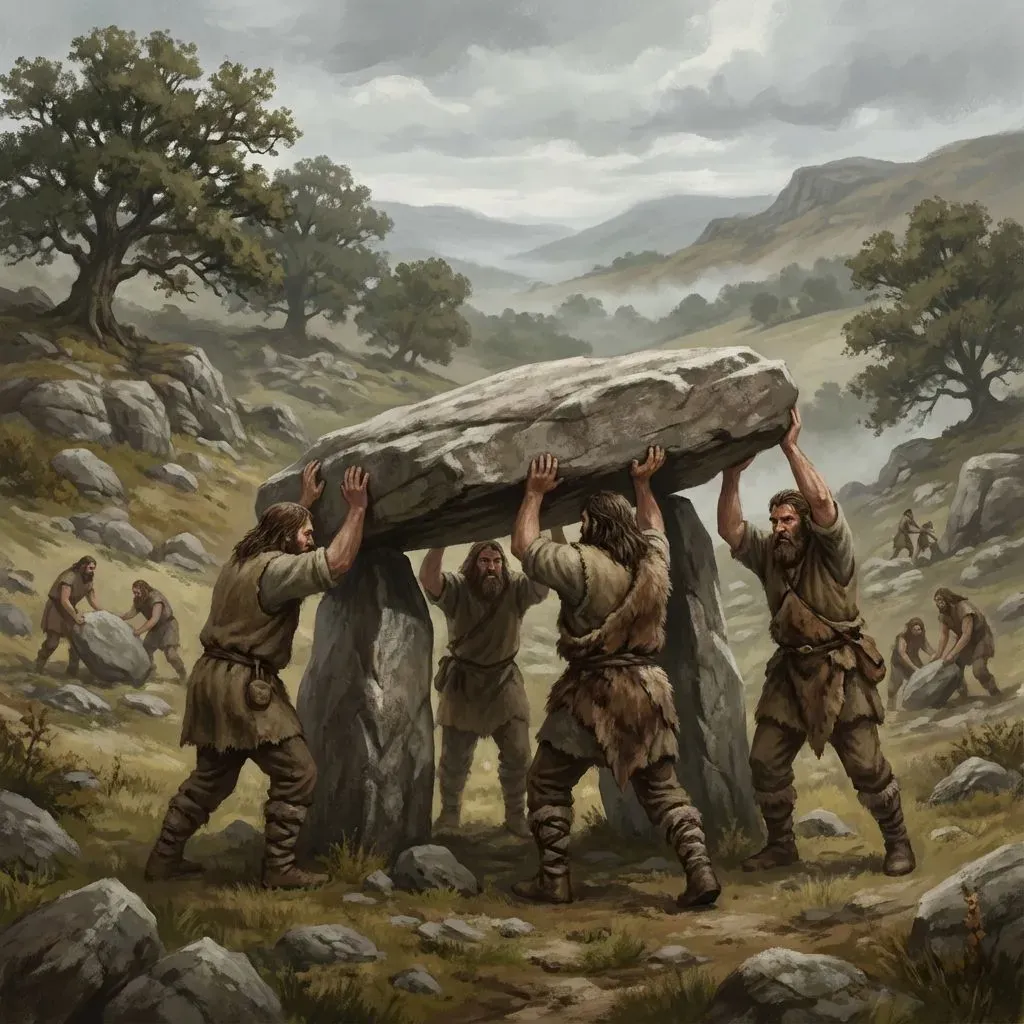
The dolmen of La Huesera, also known as Alto de la Huesera, is an impressive megalithic monument standing on the heights of Rioja Alavesa near Laguardia. Its commanding position above the vineyards makes it one of the clearest examples of how prehistoric ritual architecture was tied to landscape.
This dolmen stands out for its remarkable state of preservation and for the dramatic setting around it. From its site one can see the vineyards of the region, the Cantabrian range and the open expanses of southern Araba, reinforcing the monument?s territorial and symbolic power.
The structure consists of a funerary chamber formed by large upright slabs and covered by a heavy capstone. Over the millennia it served as a place of collective burial and remembrance, turning La Huesera into both an archaeological reference point and a powerful image within Basque megalithic heritage.
The dolmen has been the subject of archaeological work that recovered valuable human remains and grave goods. Today the monument is prepared for visitors and forms part of a megalithic route linking several of the major prehistoric sites of Rioja Alavesa.
The Navarrese knight who, deceived by the devil, committed parricide and wandered in chains until Saint Michael freed him at Aralar.
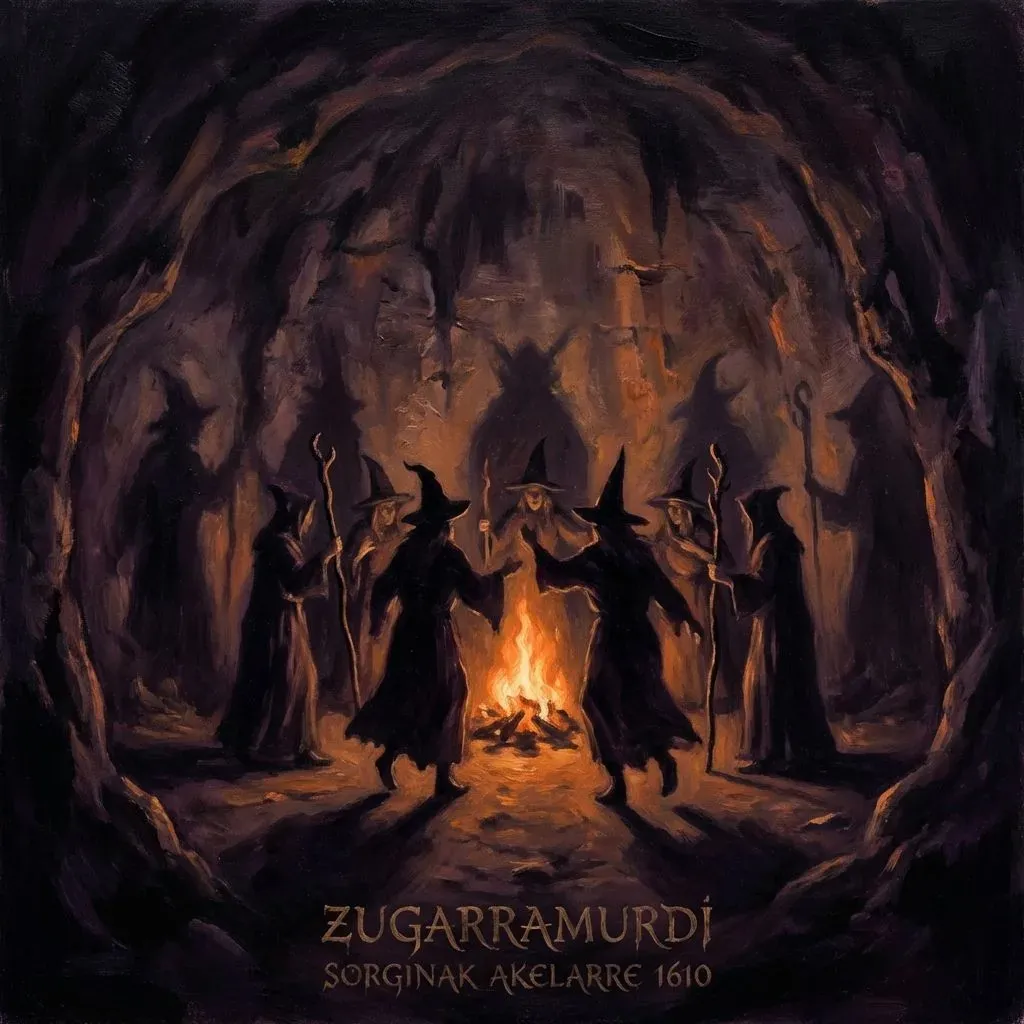
The famous inquisitorial trial of 1610 against the Navarrese witches who held akelarres in the sacred cave.
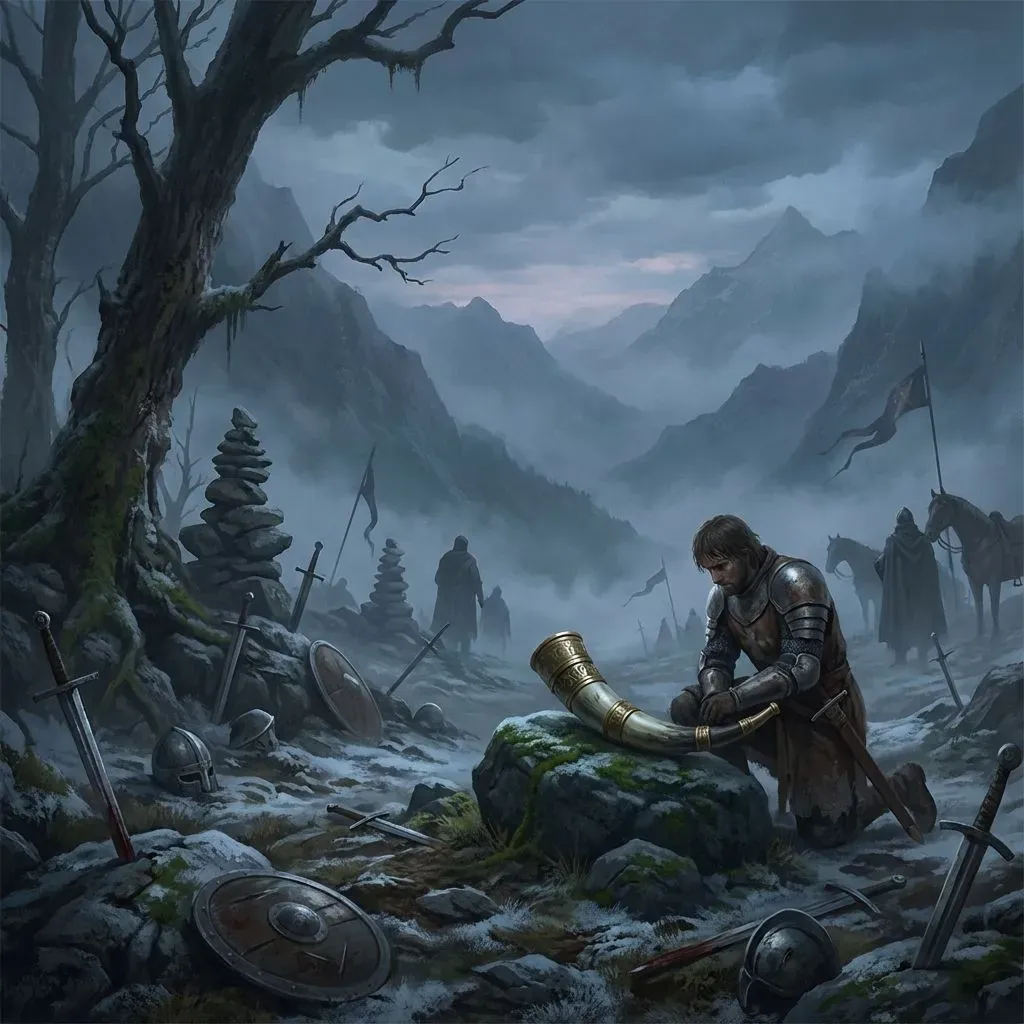
The Basque ambush against Charlemagne's army in the Pyrenean pass where the legendary Roland fell.
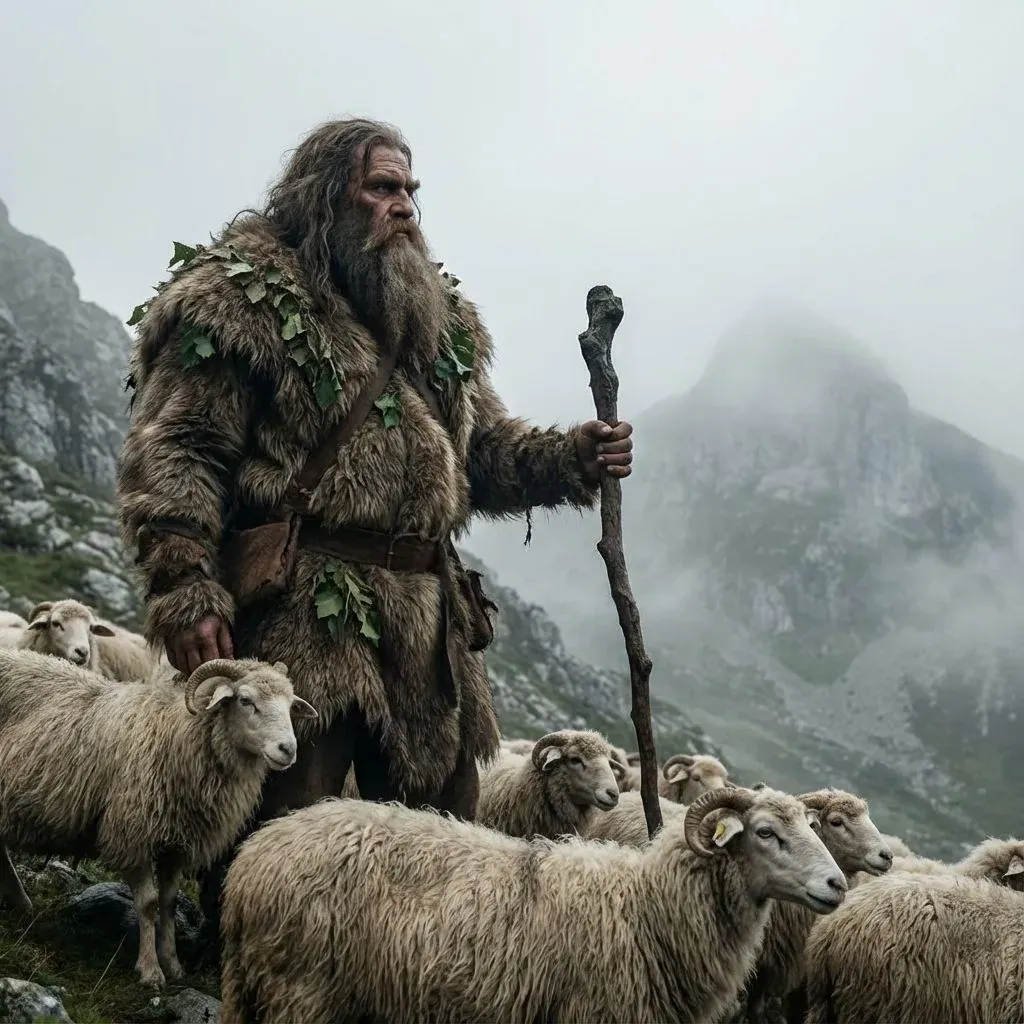
The shaggy giant who lives in the forests, protector of flocks and guardian of the secrets of agriculture and the forge.

Seductive nymphs who dwell in rivers and springs, recognisable by bird feet or fish tails, combing their hair with golden combs.
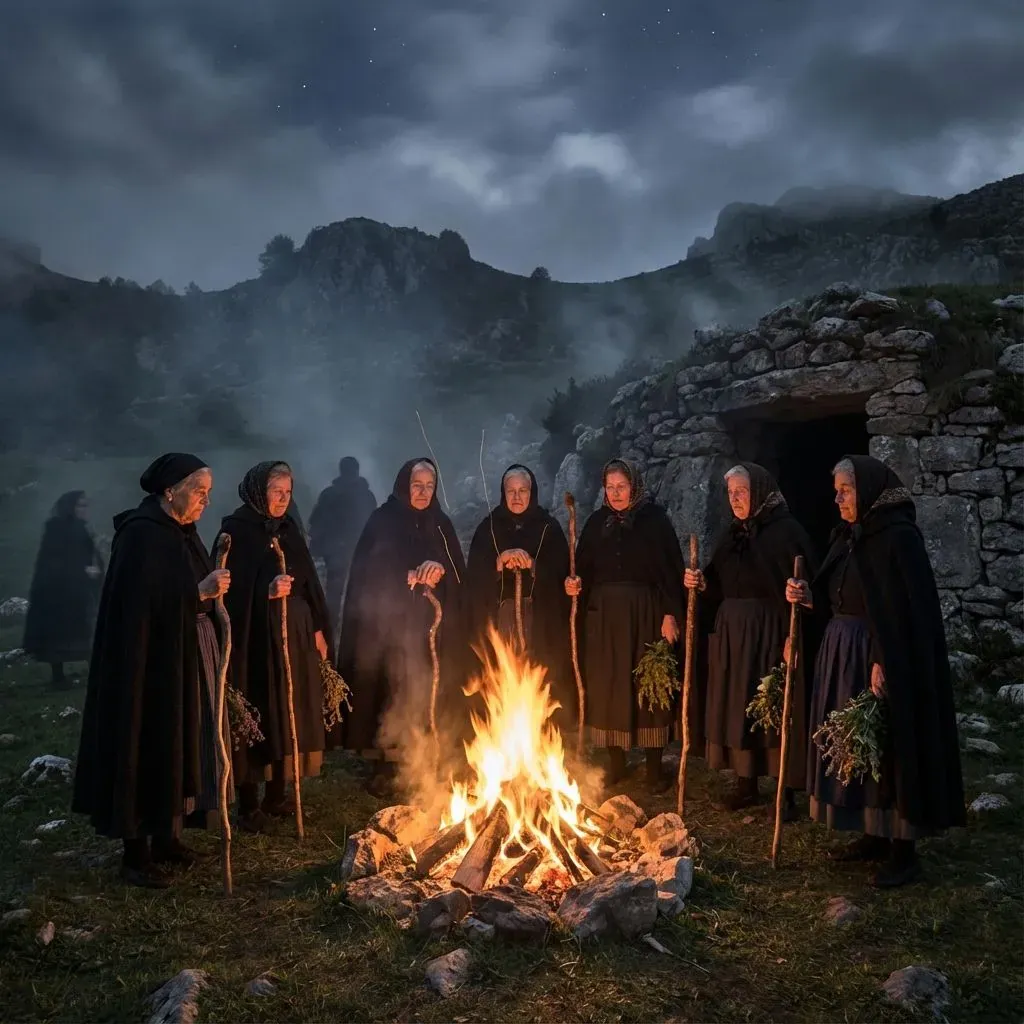
The Basque witches and wise women, priestesses of Mari who mastered potions, curses and the art of flying through the night sky.
La Huesera dolmen, near Laguardia in Rioja Alavesa, is one of Álava’s major megalithic sites for the quantity and quality of its human remains. Twentieth-century excavations recovered skeletons of more than 140 individuals, making it one of the Basque territory’s most intensively used collective tombs and demonstrating burial activity over several millennia.
The name La Huesera, meaning a place of bones, plainly refers to remains local shepherds probably found regularly when rain eroded the earth covering the burial chamber. Rather than irreverence, it reflects how naturally rural communities lived alongside their distant ancestors’ remains as part of the everyday landscape.
Rioja Alavesa, home to La Huesera, forms a natural boundary between the Atlantic north and Mediterranean south. The abrupt climatic change is visible in both landscape and architecture. Its layered cultural influences make it especially interesting for studying Basque prehistory and history.
The dolmen lies just kilometres from Laguardia, one of the Basque Country’s best-preserved medieval towns. A visit can combine megalithic heritage with the architecture and wine culture characteristic of this distinctive Álava region.