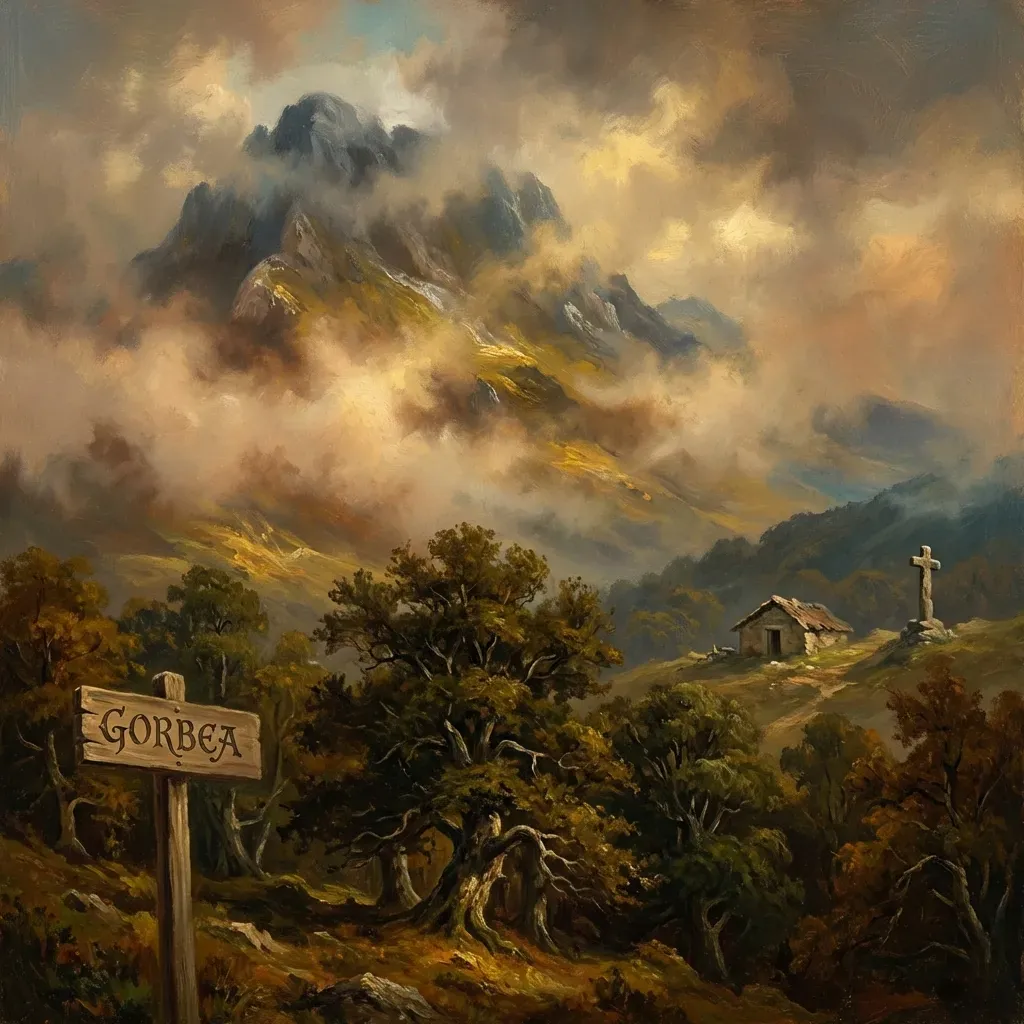
Teodosius of Goñi
The Navarrese knight who, deceived by the devil, committed parricide and wandered in chains until Saint Michael freed him at Aralar.
— Nafarroa —
Urdazubi, known in Spanish as Urdax, is a small village in the Navarrese Pyrenees that preserves the charm of the traditional settlements of the region. Its stone-built centre, the old bridge and the monastery create a landscape where history and quiet rural life still feel closely intertwined.
Although transformed over the centuries, the monastery still preserves elements of great artistic value, including its cloister and the church that now serves as the parish temple. The Premonstratensian monks played a central role in shaping the spiritual and cultural identity of this borderland community.
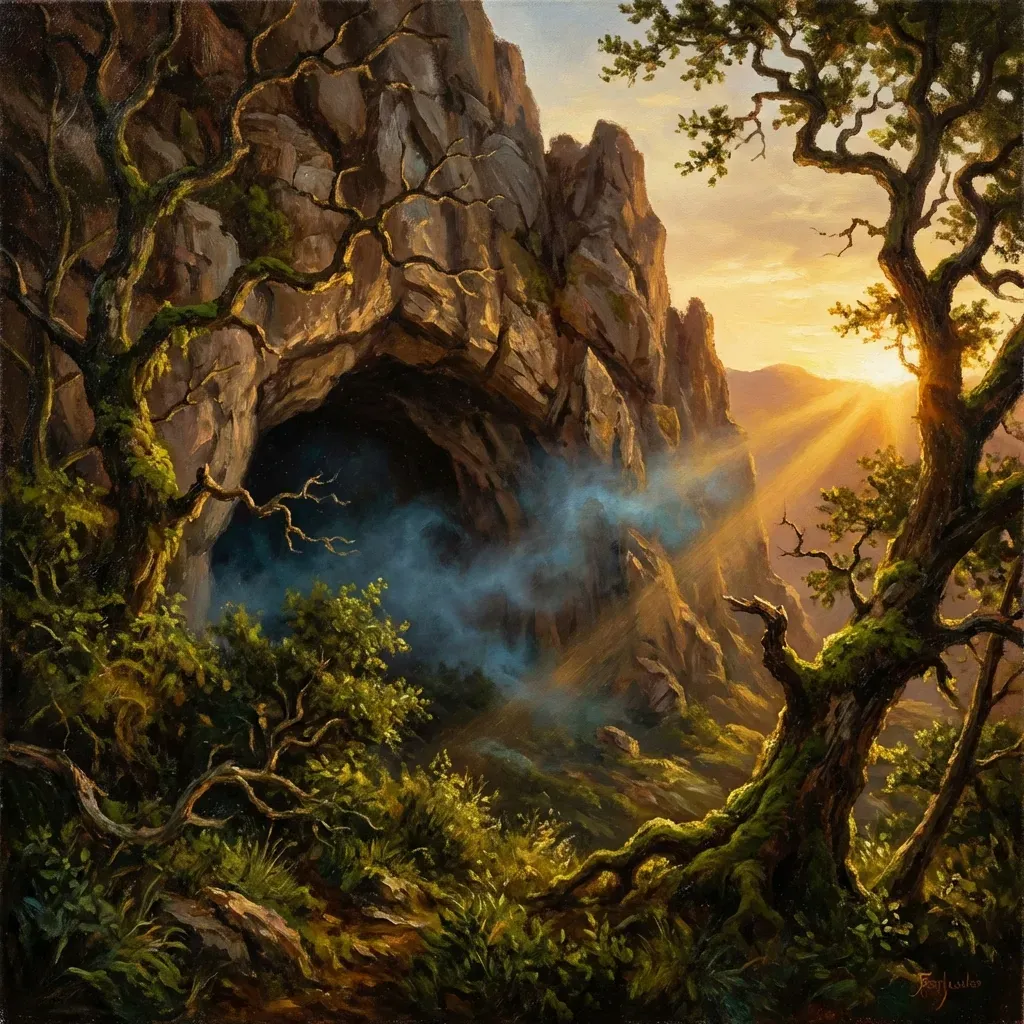
Beneath the monastery stretch the famous caves of Urdazubi, carved by the Urtxuma river over millions of years. The tourist route reveals spectacular limestone formations and reinforces the sense that the village stands above a hidden world of water, darkness and legend.
Urdazubi is a gateway to the Baztan valley and a stage on the Way of St James from France. Stone farmhouses, latxa sheep pastures and surrounding mountains form a picture of traditional rural Navarre.
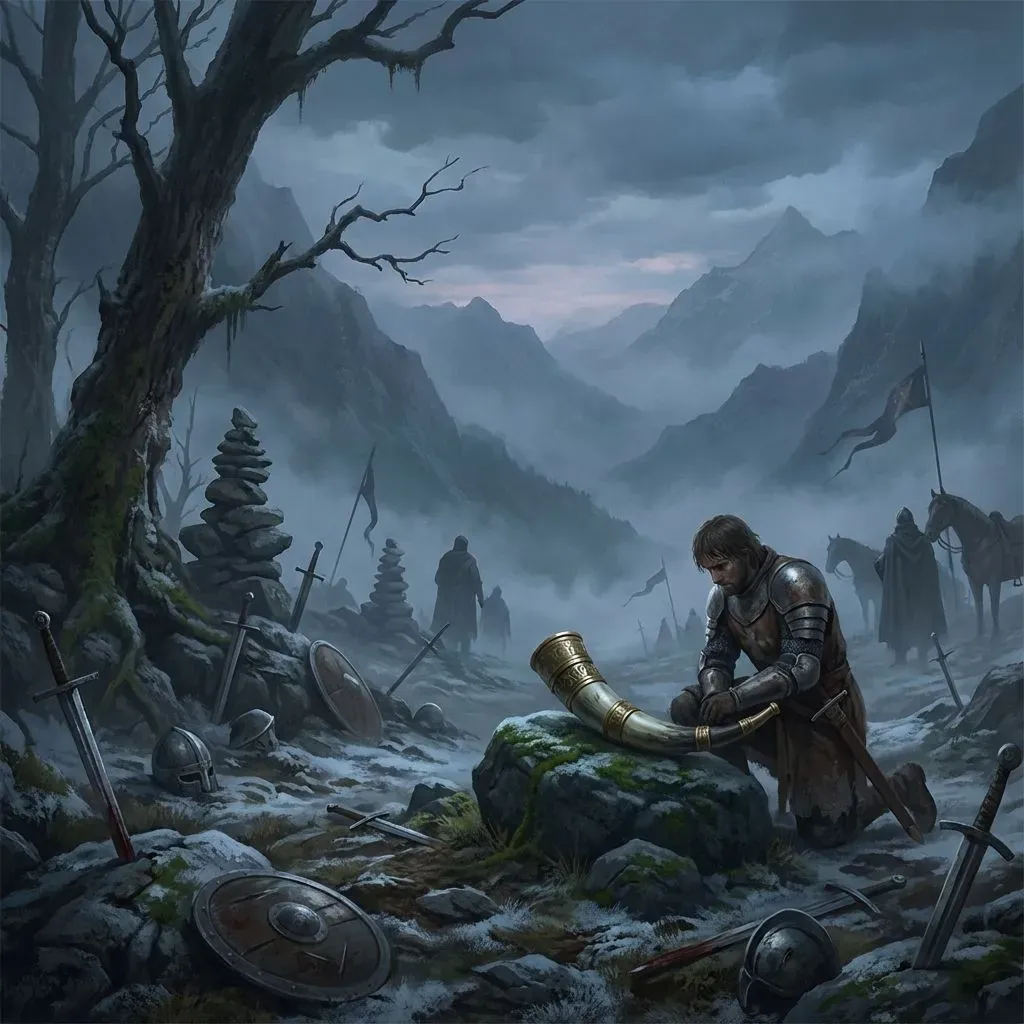
The Navarrese knight who, deceived by the devil, committed parricide and wandered in chains until Saint Michael freed him at Aralar.
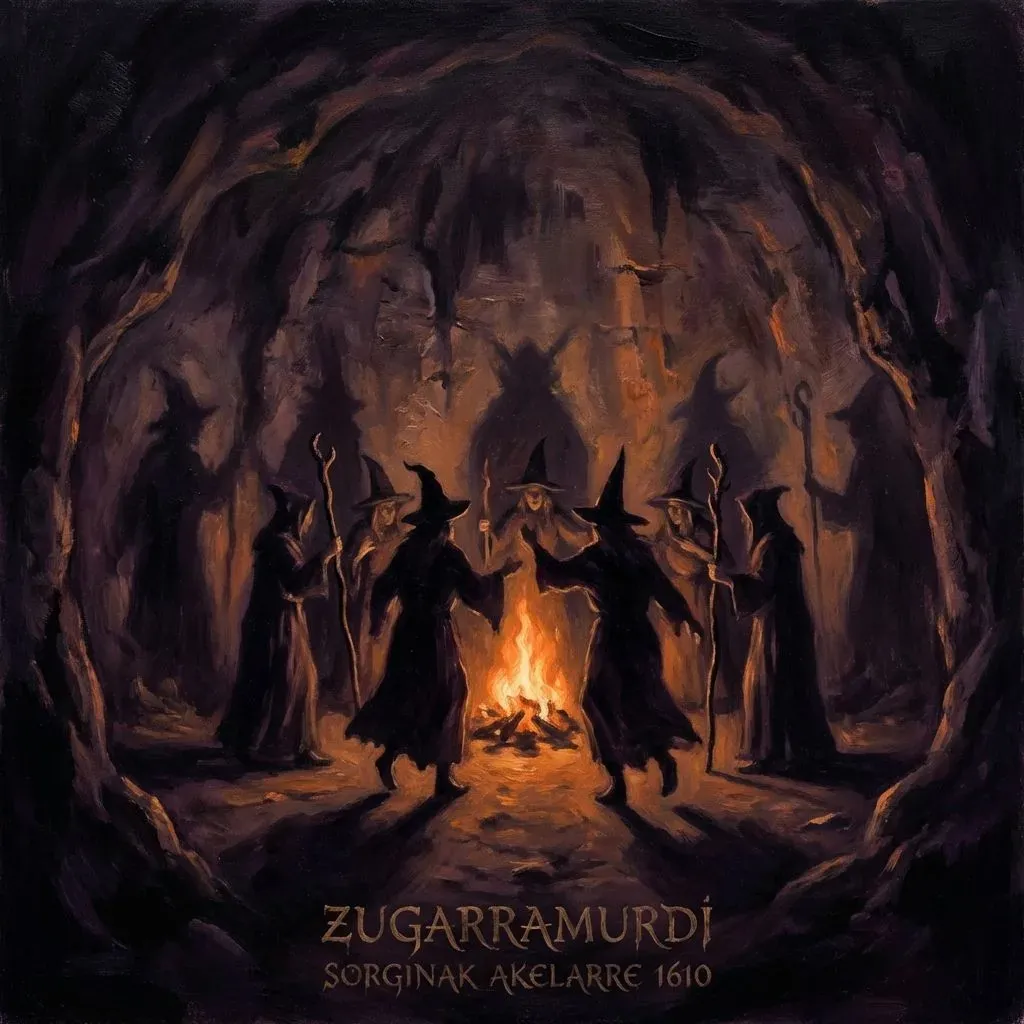
The famous inquisitorial trial of 1610 against the Navarrese witches who held akelarres in the sacred cave.
The Basque ambush against Charlemagne's army in the Pyrenean pass where the legendary Roland fell.
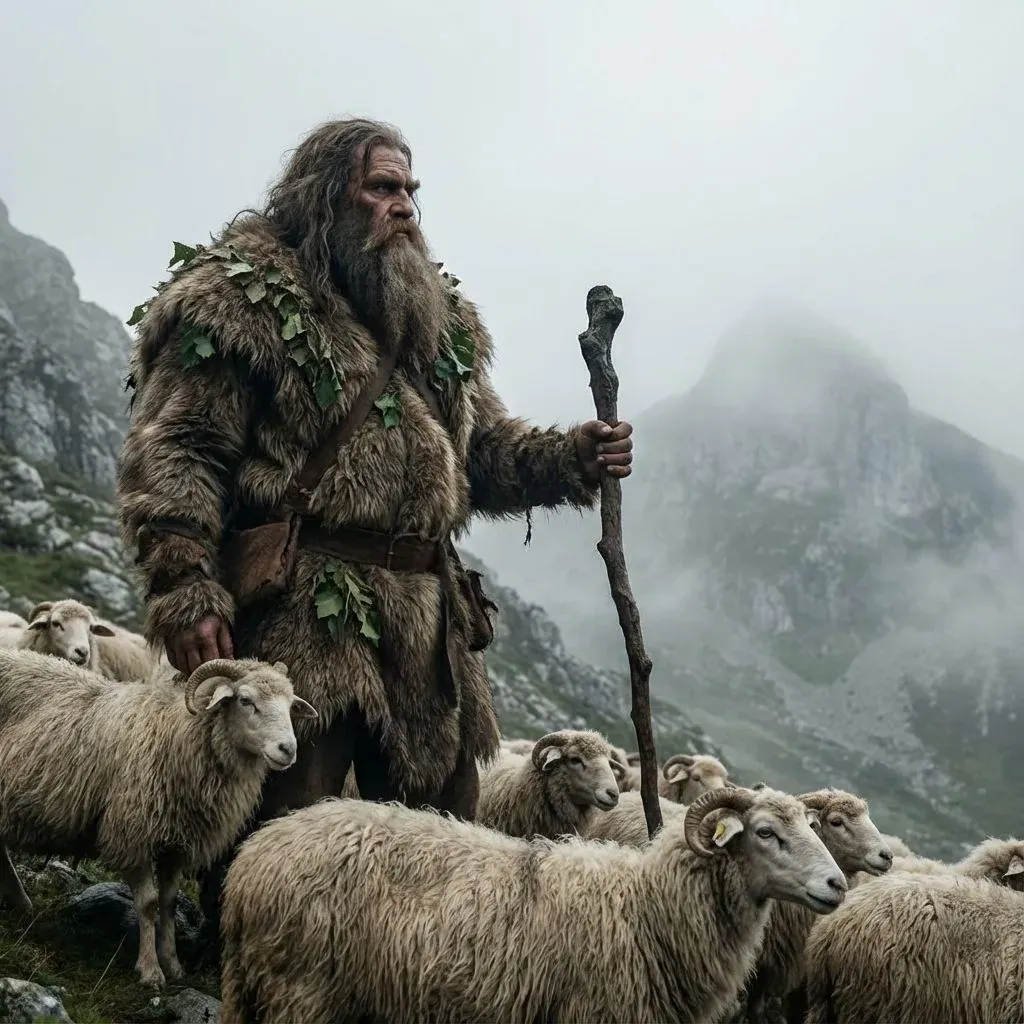
The shaggy giant who lives in the forests, protector of flocks and guardian of the secrets of agriculture and the forge.

Seductive nymphs who dwell in rivers and springs, recognisable by bird feet or fish tails, combing their hair with golden combs.
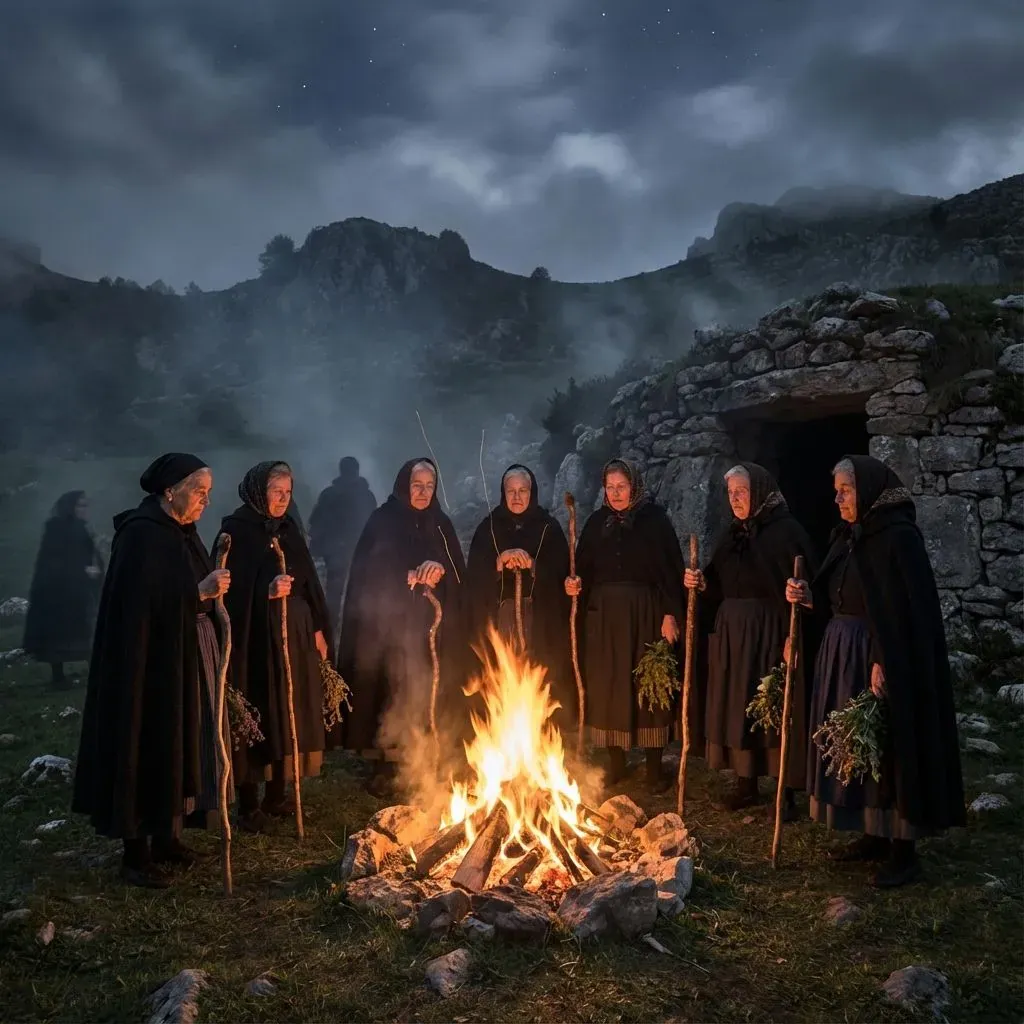
The Basque witches and wise women, priestesses of Mari who mastered potions, curses and the art of flying through the night sky.
Urdazubi, near the French Basque border in northwestern Navarre, has a historical importance far beyond its size. It was a major medieval passage between Navarre and Labourd. Its thirteenth-century Premonstratensian monastery, among the few surviving examples of the order in Spain, remains architecturally striking.
The Ursua connects Urdazubi with nearby caves, including Zugarramurdi two kilometres north. Over millions of years, it and its tributaries shaped the limestone karst, creating cavities central to seventeenth-century Basque witchcraft history and still the area’s main tourist attraction.
Founded in the twelfth century as a priory dependent on the Norman abbey of Saint Josse-sur-Mer, Urdazubi monastery records the medieval religious and commercial networks linking northern Navarre with Europe. Documents in Navarrese and French archives reveal economic and jurisdictional activity that made this remote place an active node in medieval religious life.
Urdazubi’s beech woods and green meadows along the Ursua offer hill walks linking the caves, monastery, Zugarramurdi and French Basque valleys immediately to the north. The village’s tranquillity and attractive surroundings make it an excellent base for exploring nearby landmarks.