Teodosius of Goñi
The Navarrese knight who, deceived by the devil, committed parricide and wandered in chains until Saint Michael freed him at Aralar.
— Nafarroa Beherea —
Donibane Garazi, known in French as Saint-Jean-Pied-de-Port, is one of the most emblematic towns of the French Basque Country, historical capital of Lower Navarre and a traditional starting point for the Camino de Santiago across the Pyrenees.
The town developed below the pass of Roncesvalles, in a strategic communications enclave between the northern and southern Basque lands. Pilgrims arriving from across Europe turned it into a place of passage, exchange and memory, where roads, languages and devotions converged.
The urban ensemble of Donibane Garazi has a singular beauty: the citadel crowning the hill, the cobbled streets descending towards the Nive, the pink-stone houses with red timber frames and the gates in the old walls all create one of the most recognisable townscapes in Euskal Herria.
Beyond its heritage, the town is an excellent base from which to explore Lower Navarre: Pyrenean valleys, the vineyards of Iroul?guy and the traditional villages of the surrounding area. And of course, it remains one of the great symbolic gateways into the Basque world.
The Navarrese knight who, deceived by the devil, committed parricide and wandered in chains until Saint Michael freed him at Aralar.

The famous inquisitorial trial of 1610 against the Navarrese witches who held akelarres in the sacred cave.
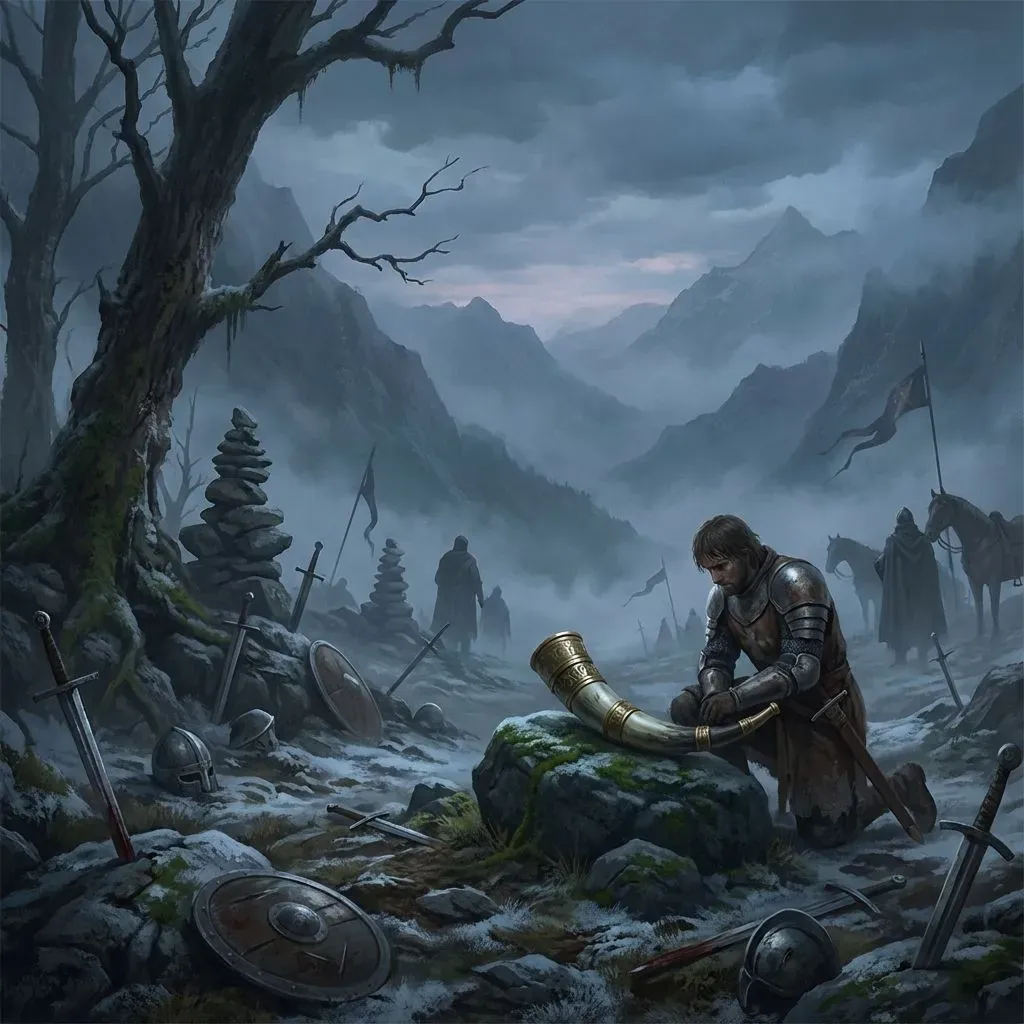
The Basque ambush against Charlemagne's army in the Pyrenean pass where the legendary Roland fell.

The shaggy giant who lives in the forests, protector of flocks and guardian of the secrets of agriculture and the forge.

Seductive nymphs who dwell in rivers and springs, recognisable by bird feet or fish tails, combing their hair with golden combs.
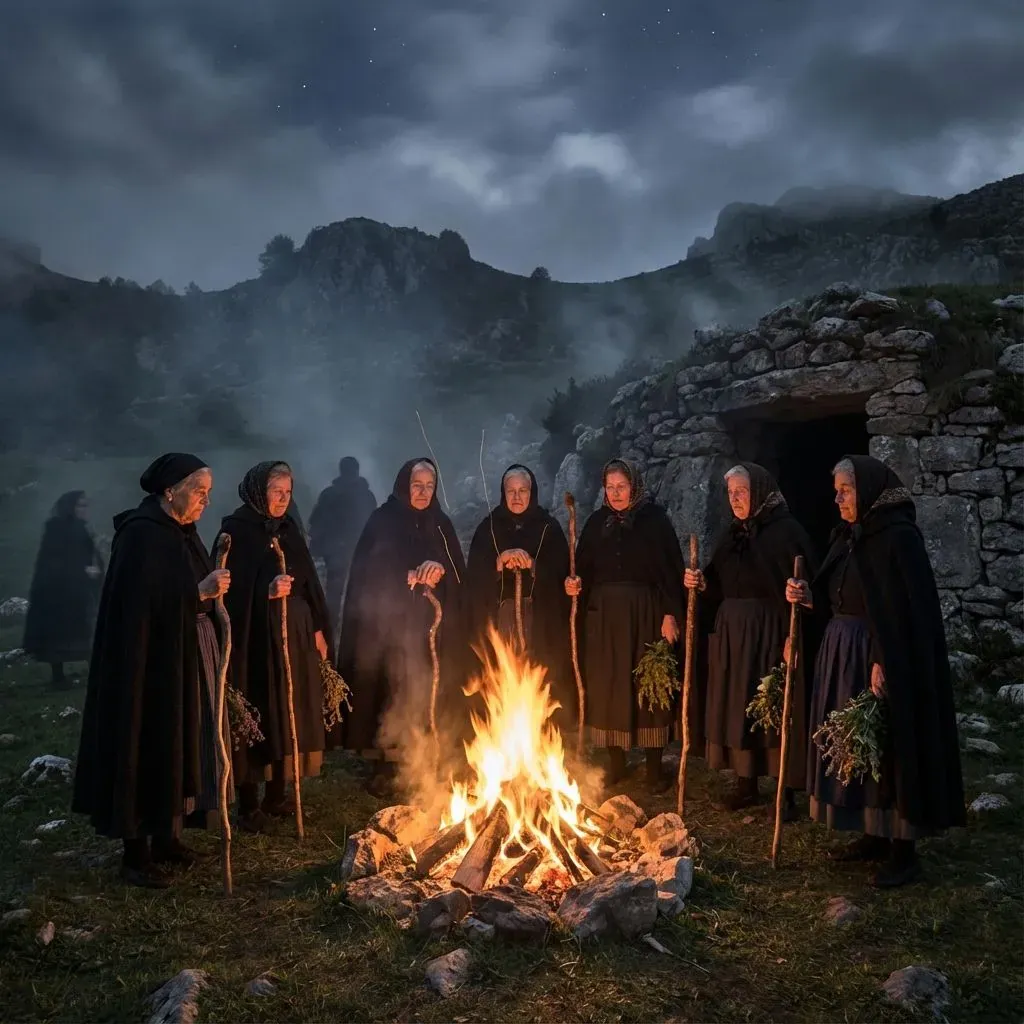
The Basque witches and wise women, priestesses of Mari who mastered potions, curses and the art of flying through the night sky.
Donibane Garazi, also known as Saint-Jean-Pied-de-Port, has gathered pilgrims crossing the Pyrenees towards Roncesvalles for more than eight centuries. Its strategic position below the pass made it the last place to rest and resupply before the demanding ascent, giving it a commercial and cultural vitality it still retains.
The town is also the historic capital of Lower Navarre, one of the seven traditional Basque territories. Its old centre preserves notable civic and religious buildings. The main pilgrimage street descends steeply to the Nive, lined with seventeenth- and eighteenth-century Labourd-style houses whose pink sandstone façades give the town its distinctive warmth.
For the thousands beginning the Way of St James in Donibane Garazi each year, the town means more than tourism. It is a threshold where ordinary life gives way to the time and space of the pilgrimage, echoing the liminal experience of medieval pilgrims who stood in the same place with the same destination.
The green Pyrenean foothills and the Nive river with its historic bridges make Donibane Garazi a destination for relaxation and culture beyond the pilgrimage route. Lower Navarre, little known outside circles familiar with Basque culture, is among the Basque world’s most authentic and least crowded territories.