Teodosius of Goñi
The Navarrese knight who, deceived by the devil, committed parricide and wandered in chains until Saint Michael freed him at Aralar.
— Gipuzkoa —
The Deba is the river that structures the western end of Gipuzkoa, rising in the mountains of Araba near Aretxabaleta and flowing into the Cantabrian Sea at the town of Deba. Along its course, it links valleys, industrial towns and landscapes of deep historical importance in the Basque Country.
The upper Deba valley became one of the core areas of the Basque Industrial Revolution. Towns such as Mondragon, Bergara and Onati gathered forges, textile mills and later major industrial enterprises, making the river a backbone of labour, transport and transformation.
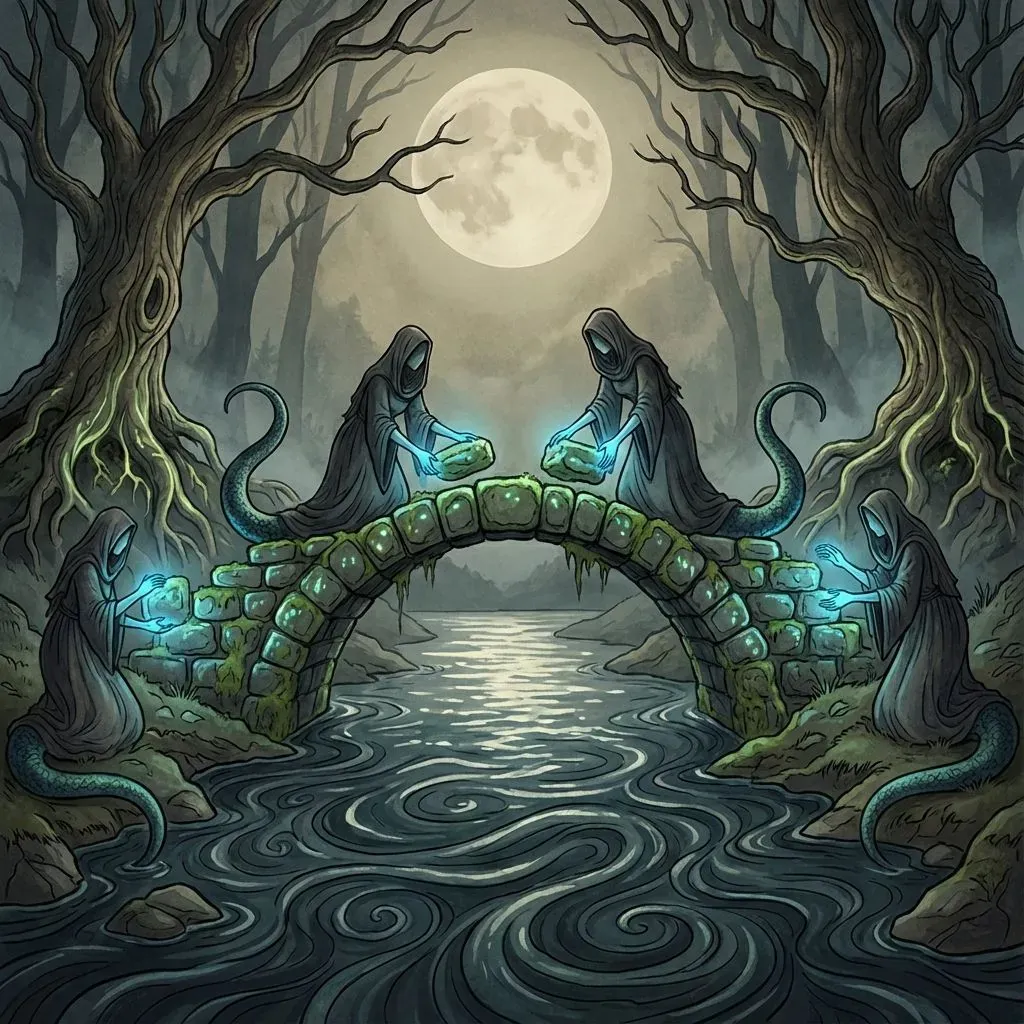
The river has also been a source of inspiration and a setting for legends. On its banks stood the historic University of Onati, while its waters pass by palaces, sanctuaries and old urban centres that reinforce the sense of the Deba as a river of memory as much as a river of industry.
The mouth of the Deba forms a small estuary surrounded by cliffs where flysch formations can be observed. The town of Deba, with its imposing Gothic church and maritime tradition, is the final flourish of a river that unites mountains, industry, history and coast.
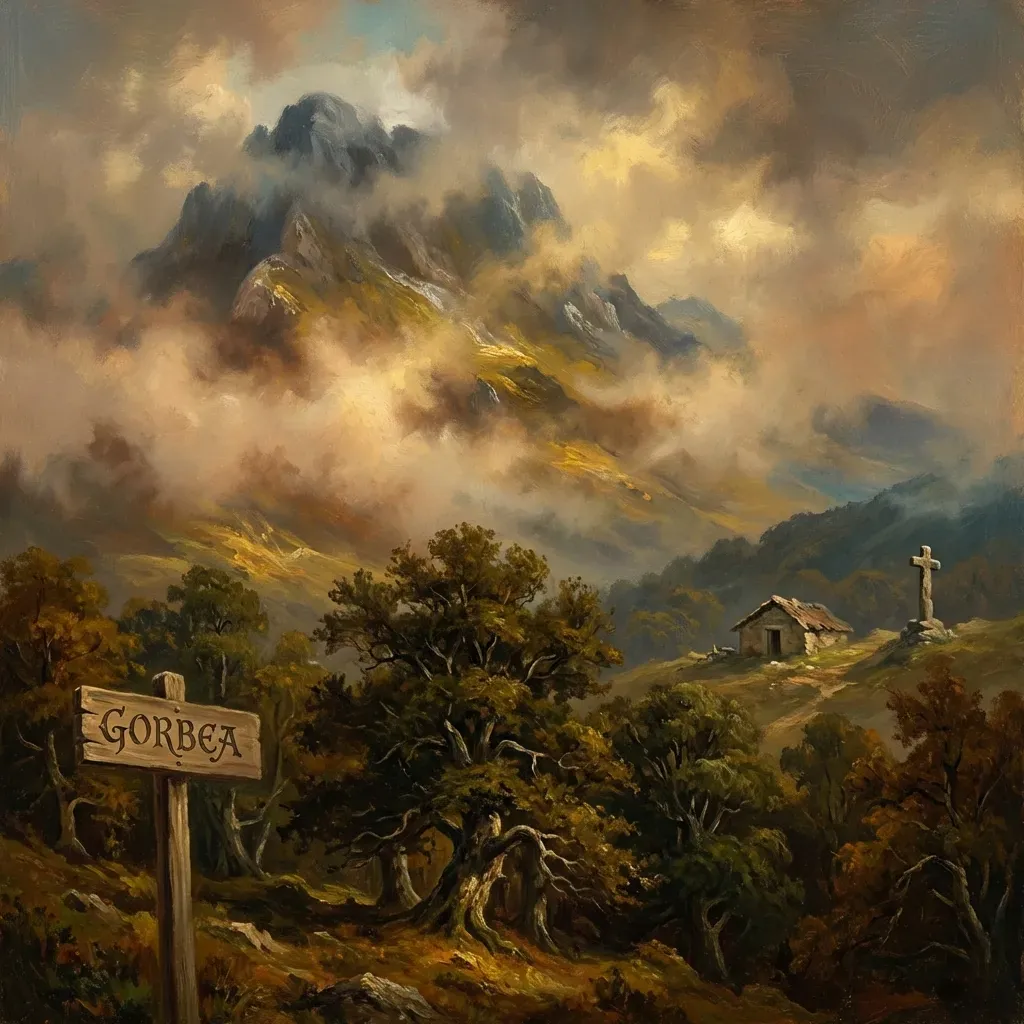
The Navarrese knight who, deceived by the devil, committed parricide and wandered in chains until Saint Michael freed him at Aralar.
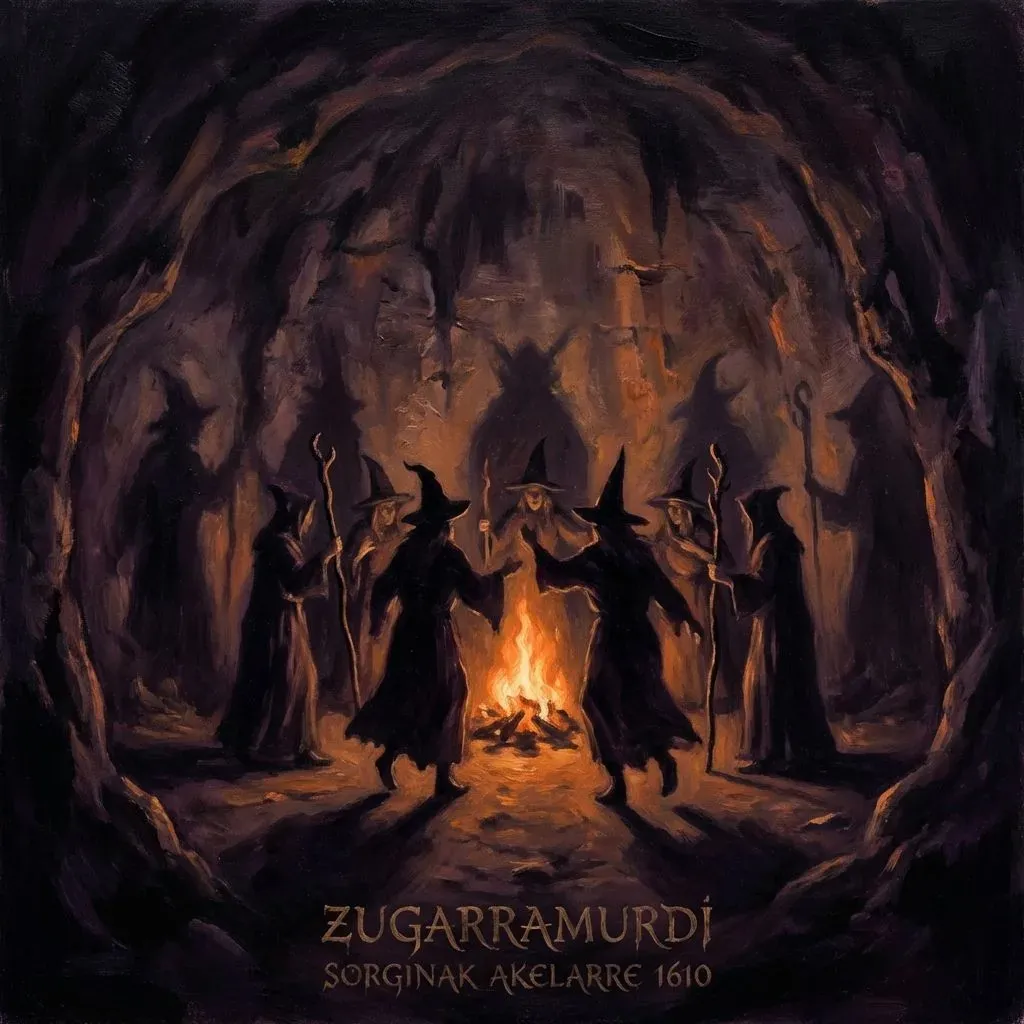
The famous inquisitorial trial of 1610 against the Navarrese witches who held akelarres in the sacred cave.
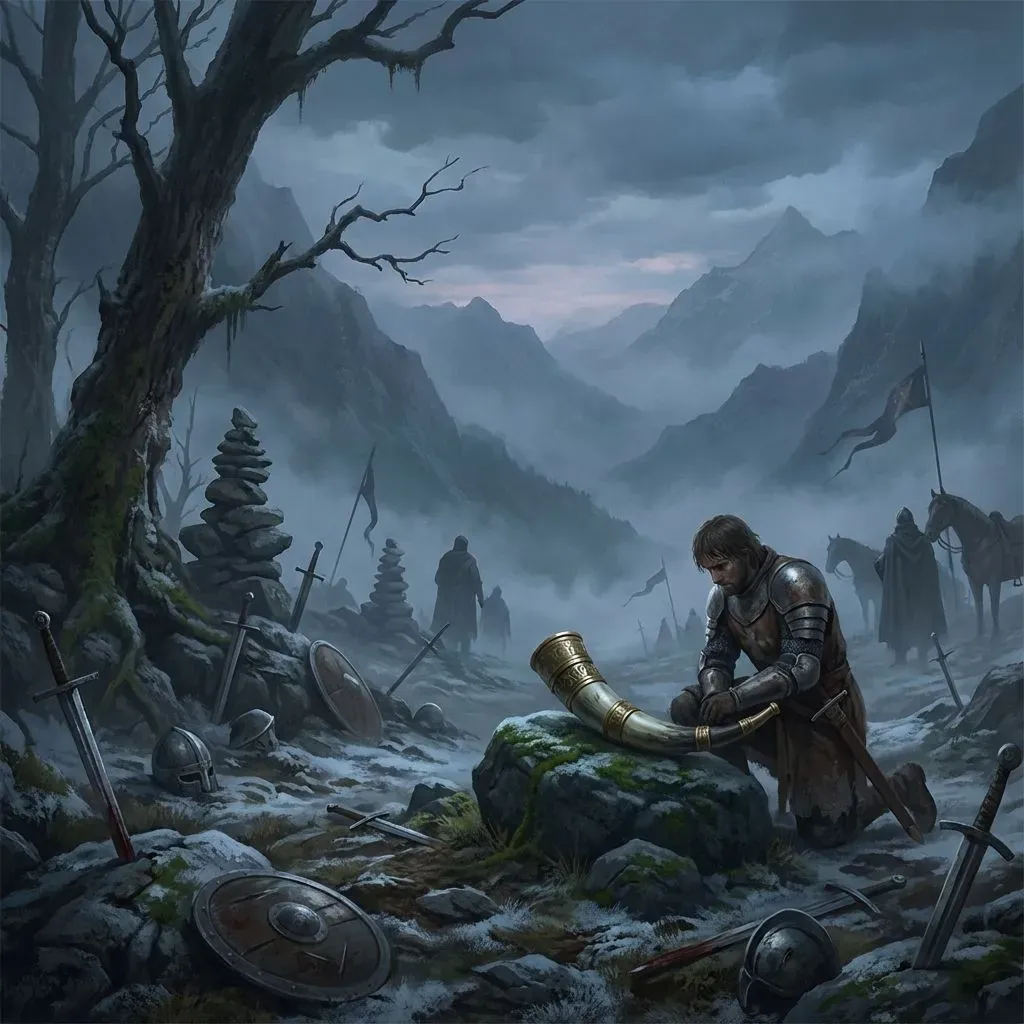
The Basque ambush against Charlemagne's army in the Pyrenean pass where the legendary Roland fell.
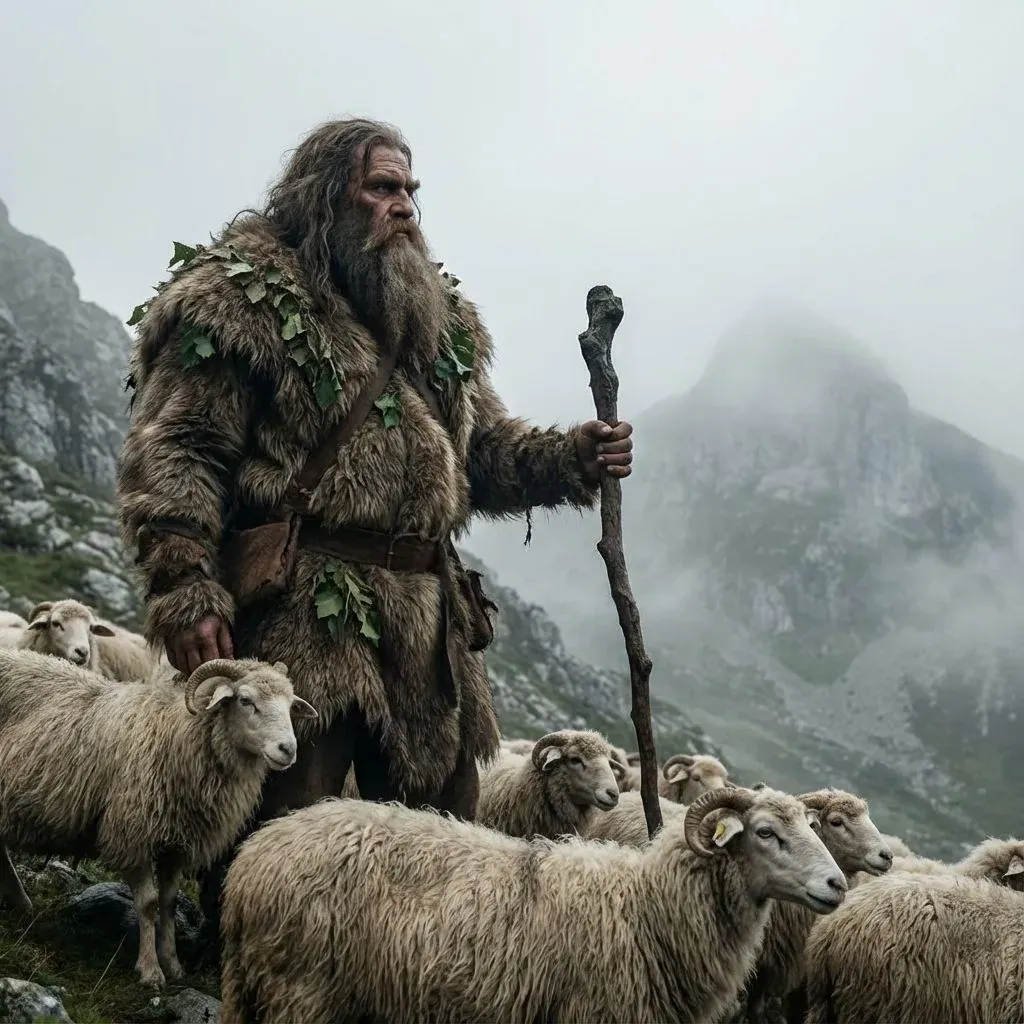
The shaggy giant who lives in the forests, protector of flocks and guardian of the secrets of agriculture and the forge.

Seductive nymphs who dwell in rivers and springs, recognisable by bird feet or fish tails, combing their hair with golden combs.
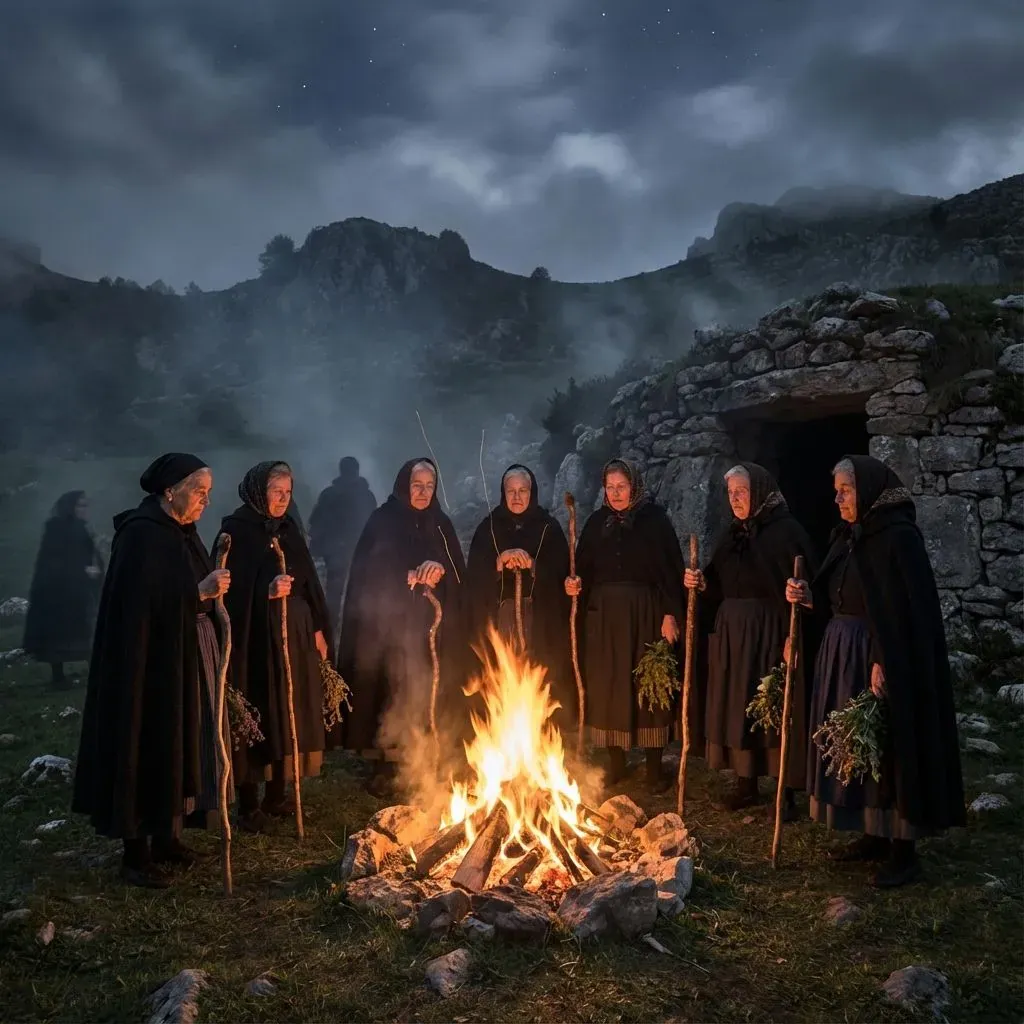
The Basque witches and wise women, priestesses of Mari who mastered potions, curses and the art of flying through the night sky.
The Deba rises on the Álava–Gipuzkoa watershed and flows north through its long, narrow valley, serving industrial settlements including Mondragón, Bergara, Eibar and Deba before reaching the sea. From the nineteenth century, favourable conditions for steelmaking and manufacturing profoundly reshaped its landscape and society.
At Deba’s mouth begins an extraordinary stretch of Gipuzkoa’s coast. The flysch cliffs towards Zumaia expose sedimentary layers like pages of a book. Geologists regard them as a major visible record of the Cretaceous–Palaeogene boundary, the rock level corresponding to the asteroid impact that wiped out the dinosaurs 66 million years ago.
The upper and middle Deba also have an exceptional industrial history. Mondragón’s cooperative movement is a worldwide example of alternative economic organisation, alongside centuries of innovative machinery and arms manufacturing. Eibar’s Arms Museum and Mondragón’s cooperative museum document the industrial story that transformed the valley during the twentieth century.
Kayaking down the lower Deba towards the coastal flysch combines the gentle river with spectacular cliffs. From the water, visitors can observe rock layers recording a great mass extinction in the earth’s history, making this a distinctive coastal experience.