Teodosius of Goñi
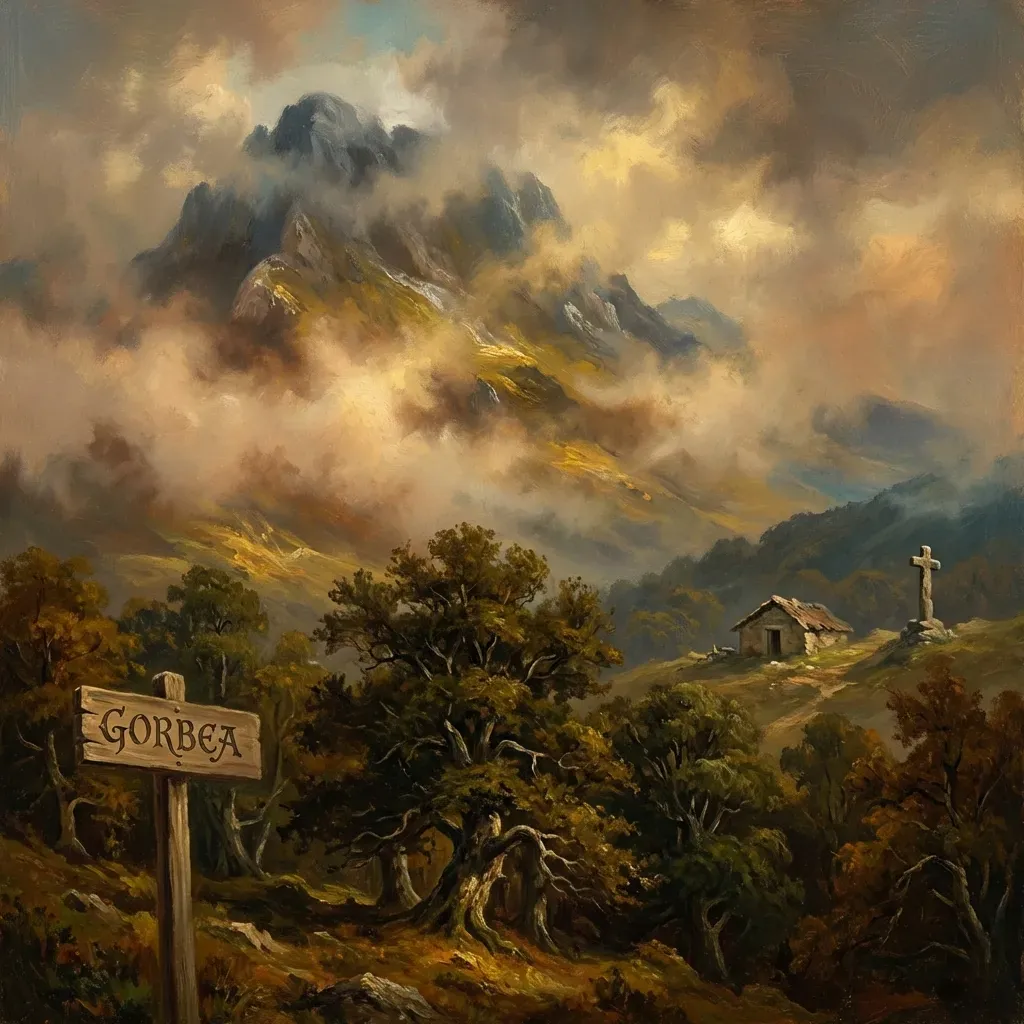
The Navarrese knight who, deceived by the devil, committed parricide and wandered in chains until Saint Michael freed him at Aralar.
— Araba —
The sanctuary of Estibaliz is the most important Marian temple in Araba and one of the finest examples of Romanesque architecture in the Basque Country. Rising above the Alava plain, it combines artistic beauty, historical continuity and a strong regional devotional identity.
The current church was built in the twelfth and thirteenth centuries, although the site had already been a place of worship in earlier times. Its Romanesque portal, rich sculptural program and serene hilltop setting make it one of the most distinctive sacred buildings in inland Euskal Herria.
The Virgin of Estibaliz, a small Romanesque carving from the twelfth century, is the patron saint of Araba. Every year, on the Sunday after the first of May, thousands of pilgrims climb to the sanctuary, renewing the bond between landscape, local identity and Marian devotion.
The surroundings of the sanctuary, with their meadow framed by oaks and holm oaks, offer a space of peace and contemplation. The views over the Alava plain from the nearby lookouts and the walks through the surrounding slopes complete one of the most serene cultural landscapes in inland Euskadi.
The Navarrese knight who, deceived by the devil, committed parricide and wandered in chains until Saint Michael freed him at Aralar.
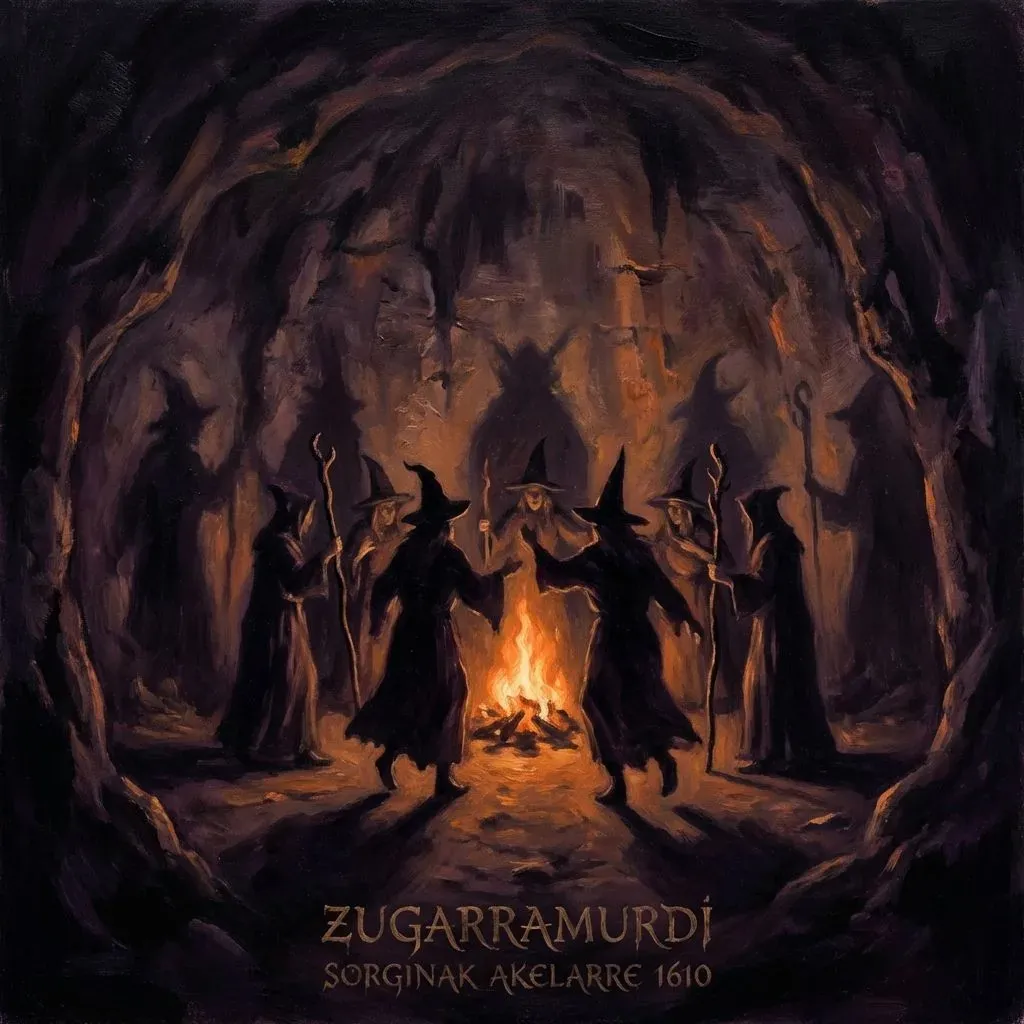
The famous inquisitorial trial of 1610 against the Navarrese witches who held akelarres in the sacred cave.

The Basque ambush against Charlemagne's army in the Pyrenean pass where the legendary Roland fell.

The shaggy giant who lives in the forests, protector of flocks and guardian of the secrets of agriculture and the forge.

Seductive nymphs who dwell in rivers and springs, recognisable by bird feet or fish tails, combing their hair with golden combs.
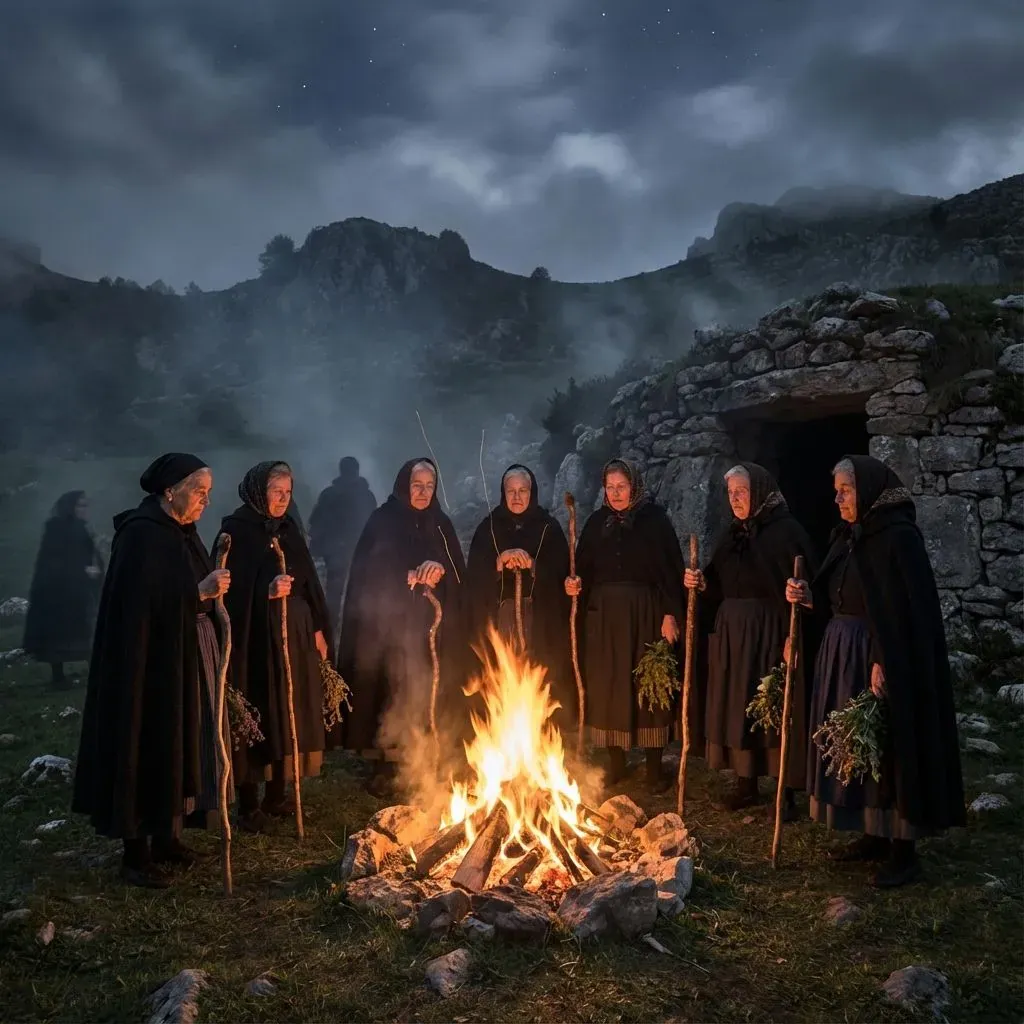
The Basque witches and wise women, priestesses of Mari who mastered potions, curses and the art of flying through the night sky.
Our Lady of Estíbaliz basilica stands on a rise overlooking the Álava plain near Vitoria-Gasteiz. Álava’s foremost Marian sanctuary is also one of the Basque Country’s finest Romanesque ensembles. Its twelfth-century image of the Virgin has focused devotion for nearly a millennium and become an enduring element of collective identity.
Much of today’s basilica results from twentieth-century restoration promoted by Álava’s provincial authority. Original Romanesque features survive, particularly the western portal, regarded as a jewel of Basque Romanesque art. Its expressive human and animal capitals are vivid records of eleventh- and twelfth-century monumental sculpture.
Estíbaliz’s Easter Sunday pilgrimage is Álava’s largest religious gathering, reflecting the continuity of popular devotion. The Virgin’s image is carried around the sanctuary, while people from across the province walk up to fulfil vows or join a communal ritual rooted deeper than Christian liturgy alone explains.
The sanctuary’s old elms and small cloister, where its Benedictine custodians maintain a contemplative community, lend Estíbaliz a peaceful, reflective atmosphere. Whether motivated by religion or culture, visitors find a respite from the nearby city’s hurried pace.